
Lithium-ion (Li-Ion) batteries are the most popular type of batteries that are used in consumer electronics. They have a high energy density, no memory effect, and only a slow loss of charge when not in use. The applications for Li-Ion batteries beyond consumer electronics are somewhat limited, however. Li-Ion batteries require bulky cathodes, typically made from cobalt oxide, which limit the battery's energy density, which may make them inadequate for more power-intensive applications, such as long-range electric vehicles. As a matter of fact, most researchers think that improvements to Li-Ion cells can obtain at most 30% more energy by weight. Li-Ion cells may therefore never give electric cars the same 500 miles per charge that is currently obtained by a tank of gasoline2.
Lithium–sulfur batteries (Li-S) may supplant lithium-ion cells because of their high storage capacity (up to five times more than Li-Ion), higher energy density (charge per weight) and reduced cost from the use of sulfur -- a cheap waste product of petroleum processing. Sulfur weighs barely half as much as cobalt, atom for atom, and can pack more than twice as many lithium ions into a given volume as cobalt oxide. Although Li-S batteries may have several times the energy density of Li-Ion batteries3, they have two major weaknesses: first, sulfur easily combines with lithium to form compounds that crystallize and gum up the battery's insides, and secondly, Li-S batteries tend to crack under the stress of repeated cycling. Current Li-S batteries may therefore become useless within a few dozen cycles.
The worldwide demand for all types of batteries in 2012 was $89.4 billion, and was expected to grow 8.1% annually to $132 billion by 20164. Rechargeable batteries will outpace non-rechargeable batteries, the former driven by uses in mobile phones, portable computers and personal entertainment devices. The global Li-Ion battery market was worth $11.7 billion in 2012 and was expected to nearly double by 2016 to $22.5 billion5.
The market potential for Li-S batteries can be illustrated in terms of dollars per kilowatt-hour. Currently, Li-Ion batteries cost about $500/kw-hr, and are anticipated to reach $180/kw-hr by 20206. According to industry sources7, the current cost for Li-S technology is about $700/kw-hr. As the technology matures and manufacturing processes are scaled up, analysts project that Li-S batteries could eventually reach $100/kw-hr8.
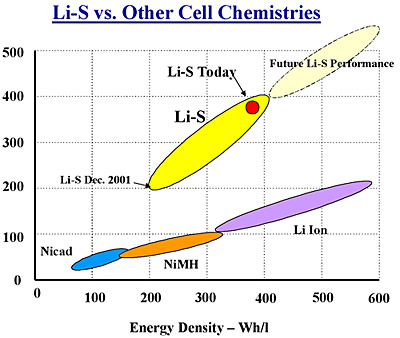 Figure 1. Comparison of Li-S with Other Cell Technologies
Because of the tremendous potential of Li-S technology, the competitive landscape in the Li-S technology field has grown significantly in recent years. Numerous research organizations are devoting tremendous resources into various Li-S technology development efforts for use in numerous end products, such as electric vehicles, consumer devices, electronics and computers. The large number of active research and development programs, coupled with the lack of a clear front-runner technology makes it difficult to ascertain the competitive advantages of one technology development effort over another.
Commercialization efforts have recently been undertaken by a handful of companies, with initial products being introduced for military applications9, which will pay a premium price for high energy density batteries (i.e., high energy to weight ratio). Because military applications are unique, commercial off-the-shelf products are typically not available and the military has traditionally funded a considerable amount of R&D to meet their specific needs. Potential defense applications include small battery-powered systems that are carried by soldiers and unmanned electric vehicles (terrestrial, aerial and underwater). As manufacturing and material costs decrease and technology development challenges are overcome, the price for Li-S batteries will continue to decrease, making them palatable for longer-term commercialization in automotive markets, consumer electronics, computers, power tools and medical devices.


