
Wireless signals can be found everywhere: at home, at the office and in public areas.
One company, Cognitive Systems Corp., recently released its personalized hardware comprised of its very own system on a chip, a cloud-computing system and a software platform that is making it possible to use these wireless signals to our advantage in ways other than communication.
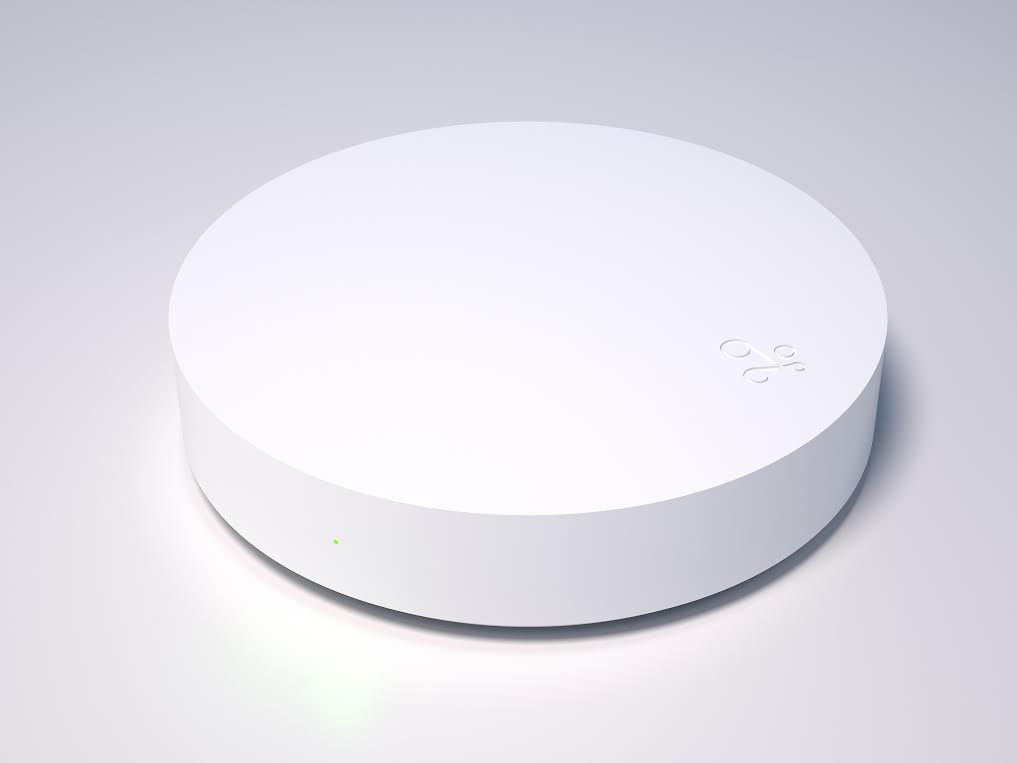 The amera unit. (Image Credit: Cognitive Systems Corp.)
Co-founders Oleksiy Kravets and Taj Manku, along with a team of tech specialists, have been working together for years, and now they’re working toward the common goal of visualizing the invisible.
“Both of us have a pretty strong technical background. We love technology – it’s part of our DNA,” says Kravets, co-founder of Cognitive Systems Corp., whose expertise is in radio RF design, digital silicon and software.
The two described the “light-bulb moment” they had when the idea for the amera platform struck them in a gas station. They started pondering the idea of “seeing wireless” and using it to extract information to help people, explains Manku, who also has a background in wireless technology and has founded several companies.
“We talked about how it could look, what we could do with it – we even created a roadmap for how it would expand,” says Manku.
After 18 months of development, Cognitive Systems Corp. released the amera sensing platform, based on the R10 supercomputer chip, which features four wireless receivers and dual multi-vector processors.
The company designed the R10 chip in such a way that it would replace alternative hardware, also capable of detecting and processing wireless signals in real-time that could cost thousands of dollars.
“The platform has been designed in a very general way. It’s a very sophisticated supercomputer that can analyze information and relay it to the end user,” says Kravets.
The unit works by lighting up the world and making the invisible spectrum of wireless signals visible. The R10 supercomputer then process the information and sends it to the company’s cloud computing platform, which breaks down the data and delivers it to different apps.
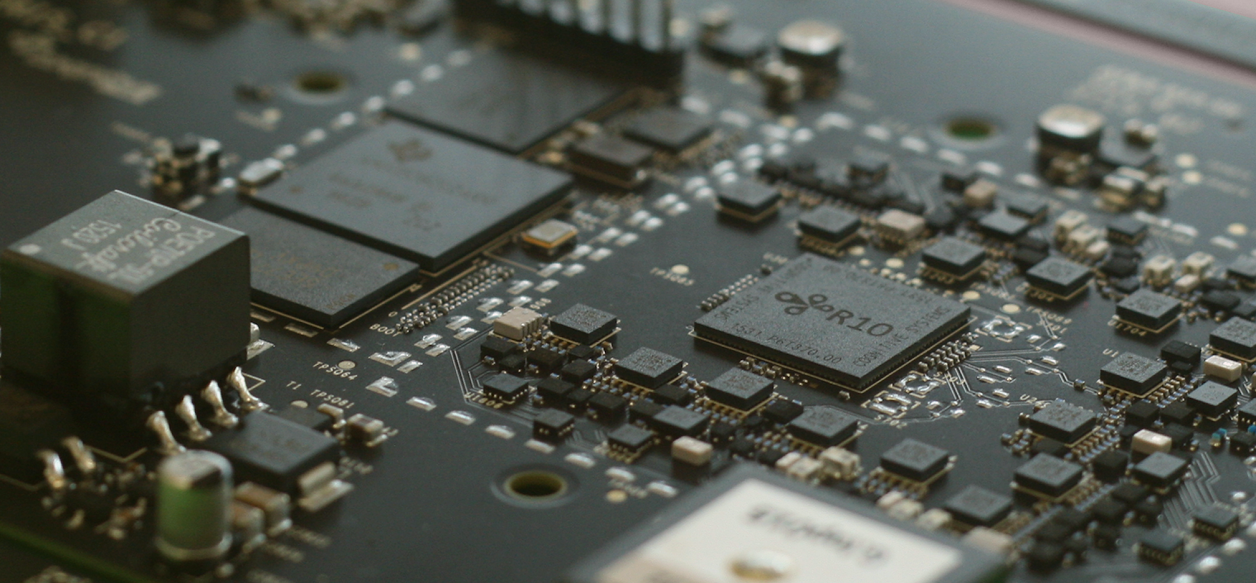 The R10 chip. (Image Credit: Cognitive Systems Corp.)
For example, amera apps can provide information about intruders or unwanted wireless devices in your home or even an unsecure Wi-Fi network.
Users can install the amera device within their home to analyze wireless signals around them. To accompany amera, Cognitive Systems created Fyrefly which can be networked with the system to enhance its capabilities.
The company has revealed some potential applications for amera, which include home security systems, which Kravets emphasizes is just one element of the product and emergency location services.
Cognitive Systems also has a visual tool called “ameraworld” which allows users to look at the wireless spectrum and see how it looks everywhere on the planet.
“This enables carriers or others interested to deploy hardware that enables sufficient communication among devices,” says Manku.
Since every device emits RF, this allows for spectrum analysis and traffic flow on a global level.
The company sees potential value for amera in smart-city initiatives where people want a better understanding of the dynamics and flow within the city.
When it comes to using amera in applications like emergency services, Kravets and Manku point out the obvious: most people today carry some sort of device on them. So, if a person gets lost in a forest or on a mountain, Cognitive Systems can deploy the amera unit via drone or land vehicle and it can track where the missing person is by looking for the signature emitted by his or her phone.
 Co-founders of Cognitive Systems Corp. from left to right: Oleksiy Kravets, Taj Manku, Hugh Hind. (Image Credit: Cognitive Systems Corp.)
As for future potential applications for amera, the company has prepared the platform for the unthinkable.
“When we designed the R10 chip, we made sure that it had enough processing power to sustain applications that we haven’t thought of yet,” says Manku.
Now that the device has been brought to fruition, the team can determine other uses for the platform.
“Right now, we’re writing the applications that address various markets,” adds Manku. “We’ve come out of stealth mode. Now we can address the market and realize all of the applications.”
