
Sponsored Content
Industrial Electronics
Accelerating PCB protection at scale
08 June 2026
From zero to cured — In runway time
Airlines and airports are not the only providers that value high levels of throughput and highly repeatable scheduling. This is a challenge also faced by all manufacturers that develop, design or deliver electronic circuit boards. Electronic circuit boards are the centerpiece of countless applications — from mobile, hand-held devices to automotive electronics, from household appliances to heavy industrial machinery. Conformal coatings provide effective protection against various environmental conditions such as humidity, dust, vibration and thermal stress. They form a dense and insulating protective layer over the contours of the PCB, reliably protecting sensitive components without impairing their function. As PCB designs become more compact with increasing component density and ever-expanding customer expectations, the reliance on conformal coatings continues to grow for protecting powerful electronics.
Bectron PT 4700 N, from ELANTAS, offers powerful protection as a solvent-free, light-curing conformal coating for electronic circuit boards that does not require an oven cure in the production process. Unlike conventional coating processes using solvent-based varnishes, with oven curing times of up to 20 minutes, ELANTAS Bectron PT 4700 N cures at room temperature in just 5 to 10 seconds under broadband UV light or in 10 to 20 seconds using an LED curing device (365 nm). This ultra rapid light-curing allows production to be completed in not only record time, but in runway time. In addition to this rapid curing processing, the Bectron PT 4700 N has a moisture driven secondary cure process. Allowing for cure completion of shadow areas on products in staging at room temperature versus in ovens or at the time of processing. This curing profile makes the Bectron PT 4700 N ideal for large scale production when every second counts.
 Figure 1: Electronic circuit boards are the centerpiece of countless applications. Source: ELANTAS
High altitude — Low energy
Another challenge being faced by production facilities is the increasing drive to reduce energy costs. The simplest option is to reduce the total energy needed to be used in a process. The rapid curing capability of the Bectron PT 4700 N can also aid manufacturers with reducing energy usage. By reducing the process cure time from 5 to 10 seconds via ultra-violet lighting at room temperature (3,000 mJ/cm2 lamp) from traditional oven curing times of up to 20 minutes for solvent carried systems, the total energy consumption can be reduced by a factor of 45. A further benefit of the Bectron PT 4700 N is its ability to also be cured by LED curing devices. This type of curing can reduce the energy consumption by as much as a factor of 400 over traditional varnish systems.
Energy resources are not the only advantage that can be gained when using the Bectron PT 4700 N. The nature of the rapid room temperature curing also can allow the removal of ovens from the curing process. Depending on the curing process for traditional solvent carried systems, this can also result in a reduction of the total spacing required for product staging after application. These factors can help reduce the total footprint and space required in production areas for coating and curing the product.
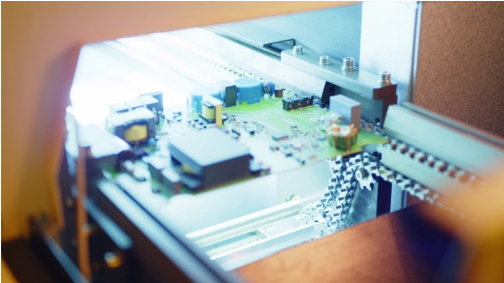 Figure 2: As PCB designs become more compact with increasing component density and ever-expanding customer expectations, the reliance on conformal coatings continues to grow for protecting powerful electronics. Source: ELANTAS
Cleared for sustainable take-off
Energy savings is just one factor companies use for driving sustainability. Other process gains to accelerate sustainability improvements include areas such as emissions, transportation fuel use with reduced weights or shipment consolidation, and waste reduction. As a 100% solids system with no solvent, the Bectron PT 4700 N can reduce the emissions needed to be tracked by an organization in its process areas by as much as 80% compared to using a highly diluted solvent carried system. Even when compared to common volatile organic compound (VOC) contents for the solvent-borne systems, the reduction would be 30% to 65%. This can help facilities limit their emissions for EH&S cost savings. In addition, the removal of solvents commonly used in solvent-borne systems also provides a safer environment for workers by removing the flammability risks of solvents as well as the health hazards affiliated with common solvent carries. Furthermore, this reduction in hazards may also allow for less requirement of administrative controls, engineering controls and PPE in the work area for a more comfortable work environment.
The use of a 100% solids/no VOC system can also supply benefits up stream and down stream of the manufacturing process. By removing the solvent carriers used in traditional systems the Bectron PT 4700 N volume can be reduced by 30% to 65% resulting in either reduced weight per shipment or improved consolidation of shipments. This can be linked directly to reduced fuel and cost needs in transportation. Within the manufacturing facility this will also equate with less space and lower movement times as efficiency is gained by having fewer total containers to complete the project. Downstream from the manufacturing process the fewer number of containers will again provide cost savings as the total amount of waste will be reduced. This reduction in container count being recycled or eliminated as waste will provide another boost to the facility’s overall sustainability.
 Figure 3: Bectron PT 4700 N from ELANTAS offers powerful protection as a solvent-free, light-curing conformal coating for electronic circuit boards. Source: ELANTAS
Bectron PT 4700 N
With this product innovation, Bectron PT 4700 N from ELANTAS offers a solvent-free, light-curing conformal coating solution with excellent adhesion that requires no curing oven in the production process. This sets new standards in terms of cost-efficiency, energy efficiency, sustainability and occupational safety.
To learn more, visit the ELANTAS website or watch the accompanying video below.
Powered by CR4, the Engineering Community
Discussion – 0 comments
By posting a comment you confirm that you have read and accept our Posting Rules and Terms of Use.
Advertisement
Advertisement
Popular News
Find Free Electronics Datasheets

Advertisement