
A humanoid robot designed to support research in artificial intelligence (AI), robotics and human-robot interaction has been developed by a team from Durham University.
The humanoid, dubbed Alan, is built on a Unitree G1 Edu humanoid robot, and is expected to be used by researchers and students as a shared research platform for exploring how robots operate alongside humans, take on complex tasks and work autonomously in dynamic environments.
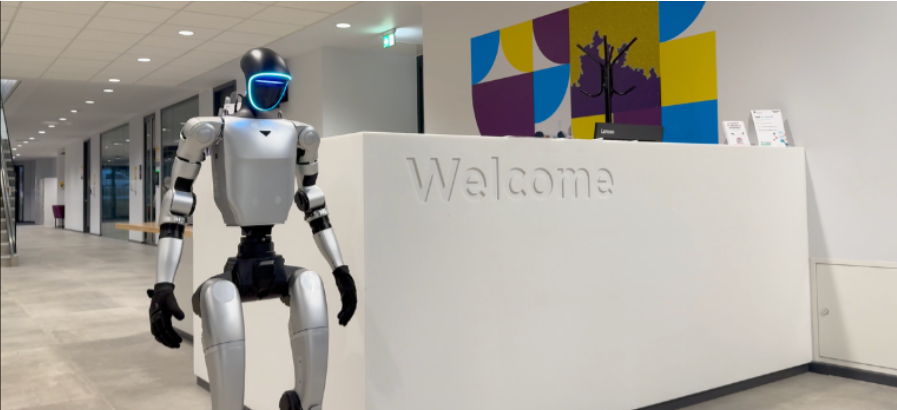 Source: Durham University
According to its developers, Alan is designed specifically for education and research institutions, enabling universities to experiment with AI and robotics software on a complete humanoid system.
Because humanoid robots are designed to operate in environments built for humans, Alan will allow researchers to experiment with robots in realistic settings like laboratories, offices and public spaces, without specific infrastructure.
The Unitree G1, with its 23◦ of freedom and full body mobility, is capable of autonomous walking, playing games, handling objects and performing movement tasks.
Specifically, Alan will study how robots can recognize people and objects, understand complex scenes, imitate human actions and make decisions. Likewise, Alan might also be used to support research in assistive robotics wherein robots can work safely alongside humans.
For more on Alan, watch the accompanying video that appears courtesy of Durham University.
