

The increasing energy demands of data centers has become one of the pre-eminent technical challenges of the modern era, driven by the rise of artificial intelligence (AI), and growth in cloud computing and data storage.
Where will all that energy come from?
Recent advancements in nuclear present a promising option. Nuclear engineers have absorbed the lessons of past accidents and designed advanced nuclear reactors that are both safer and cleaner than previous facilities. They employ passive cooling to maintain plant temperatures, even if all pumps fail. Compared to traditional fossil fuels, they emit no carbon dioxide, presenting a much smaller environmental footprint.
This is enabled by advances in uranium enrichment that have yielded an end product that is highly compact and energy-dense, making it possible for a very small amount of the element to provide energy for an entire lifetime. But it turns out, enriched uranium is increasingly more difficult to acquire.
An enriching history
GlobalSpec recently got the chance to catch up with Christo Liebenberg, co-founder and president of LIS Technologies, a U.S.-based uranium enrichment company. LIST has developed a patented laser technology that offers higher energy efficiency than traditional enrichment methods, along with the potential to be deployed at competitive capital and operational costs. The company is currently in the first of four planned phases for the technology’s development.
To provide a better understanding of the current nuclear energy landscape, Liebenberg outlined the history and evolution of uranium enrichment technologies.
“It all started with the Manhattan Project in the 1940s, in Oak Ridge, Tennessee,” he said, adding that his company is currently based “a stone’s throw away” from that very site.
Gaseous diffusion was among the earliest methods of uranium enrichment. Uranium hexafluoride (UF6) was forced through porous membranes to separate the heavier U238 isotope from the fissile U235 in a multistage cascade, yielding a product with a U235 concentration high enough to support a continuous nuclear chain reaction. The method was slow and gradual, however, and it would eventually be superseded by a more efficient centrifuge process.
“That took off in the 50s and 60s,” Liebenberg explained, “and, to this day, centrifuge is the method to enrich uranium.”
“Lasers have always been seen as the holy grail of enrichment.”
While the concept of laser-based isotope separation — in which U235 molecules could be selectively targeted at precise frequencies — offered the promise of a more cost-effective solution, multiple efforts failed to overcome the complexity hurdles for commercialization.
Taking cues from abandoned ideas
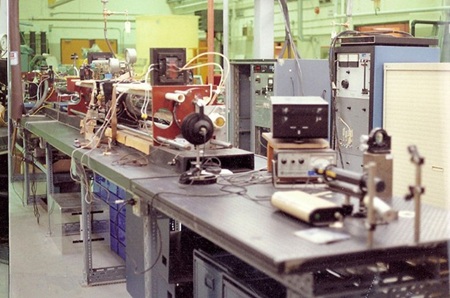 Figure 2: The CRISLA setup in 1992. Source: Christo Liebenberg/LIS Technologies Inc.
LIST takes a fresh approach to that challenge, resurrecting a method developed during the early 1990s by nuclear engineer Dr. Jeff Eerkens: condensation repression isotope selective laser activation (CRISLA).
The method, Liebenberg said, is proven, but its development was sidelined by politics: The 1989 fall of the Iron Curtain allowed Russia to flood world markets with its own enriched uranium to stimulate its nascent post-Cold War economy. This decimated the U.S. industry that had built up around nuclear fuel, making America and many other nations fully dependent on foreign sources.
Through the highly successful Megatons to Megawatts program, Russia was also able to repurpose its reserves of highly enriched uranium (HEU) as nuclear warheads were decommissioned. Weapons-grade U235 concentrations (above 90%) were blended down to low-enriched uranium (LEU) mixtures sufficient for use as fuel (3.5% to 5%) in light water reactors (LWRs).
Fast forward to today and politics are again at the crux. Multiple U.S. presidential administrations have supported rebuilding the nation’s nuclear fuel enrichment capabilities, but ties with Russia have soured over its invasion of Ukraine.
At the same time, demand for nuclear power has grown.
According to Liebenberg, all of the “big five” tech companies — Amazon, Google, Microsoft, Meta and Apple — have concluded that nuclear is the linchpin to data center power.
[Read: Google goes nuclear: AI data centers get new power sources]
Contracts are finalized or in the works to create small modular reactors (SMRs) and microreactors, which are very different from previous nuclear generation reactors. These advanced reactors consist of modular components manufactured and assembled in a factory before being shipped to a site for installation, making them well-suited for remote areas and in grids too small to host a conventional gigawatt-scale reactor. They can also be located directly next to the data centers dependent on the power they produce.
SMRs produce quantities of power ranging from around 50 megawatts to 500 megawatts; microreactors 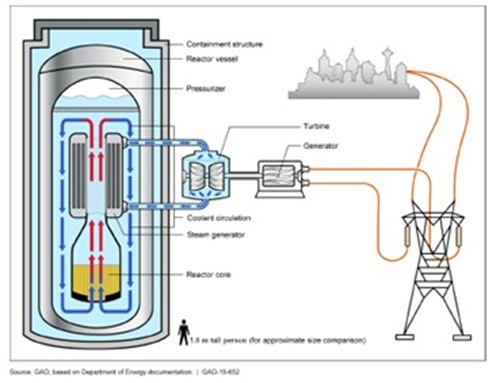 Figure 3: Small modular reactors (SMRs) like this one could be located directly next to the data centers dependent on the power they produce. Source: U.S. Government Accountability Office/public domain. produce from 1 megawatt to 20 megawatts and are sufficiently compact for transport via standard 40 ft ISO containers.
Most of these reactors use uranium with a higher level of enrichment known as high-assay low-enriched uranium (HALEU), with U235 concentrations just under 20%. While conventional reactors need refueling every one to two years, many advanced SMRs operate on a three- to seven-year cycle; some designs can operate up to 30 years before refueling is necessary.
“If you look at the overall demand for nuclear power in this country, it’s just enormous. We’ve got a massive challenge ahead over the next 25 years,” said Liebenberg, adding that President Trump has recently called for nuclear power capacity to be quadrupled by 2050.
“When one looks at the front-end of the nuclear fuel cycle, which has been totally decimated by our dependence on Russian nuclear fuel, we need to increase this capability in the U.S. not by four-times, but by more than ten-times if we want to eventually become energy independent.”
A holy grail, but not a silver bullet
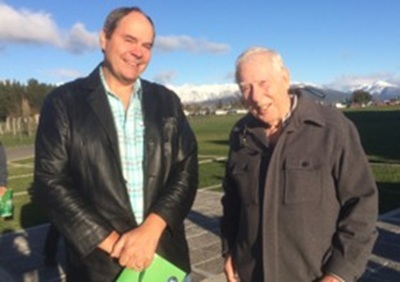 Figure 4: Christo Liebenberg, left, and Dr. Jeff Eerkens, developer of a uranium enrichment method called Condensation Repression Isotope Selective Laser Activation, or CRISLA for short. Source: Christo Liebenberg/LIS Technologies Inc.
At present, Liebenberg pointed out, there is only a single uranium enrichment plant in the U.S. — and its parent company, Urenco, is owned by a European consortium.
One part of a U.S.-focused solution may come from the U.S. Department of Energy’s LEU Enrichment Acquisition Program, which is designed to build a reliable domestic supply of nuclear fuel. The program identifies six companies to compete for a $2.7 billion pool of funding; LIST, as one of those six, is focusing its energies on the development of CRISLA.
As Liebenberg explained, laser enrichment methods can be divided into three types. Atomic vapor laser isotope separation (AVLIS) selectively ionizes and collects the U235 isotope from a uranium vapor, but not without drawbacks: It involves extremely high temperatures (around 4,000 K) and corrosiveness, which prompted research on the method to stop in the 1990s. Molecular laser isotope separation (MLIS), by contrast, selectively excites U235 within a gaseous UF6 compound; it calls for complex high-pressure laser systems and wavelength convertors to produce pulses of 16 µm photons, and the off-time between pulses presents a significant degree of inefficiency.
“There’s a reason why no one has been able to commercialize, because of these complexities, with either AVLIS or 16-micron MLIS,” said Liebenberg.
CRISLA’s approach, by contrast, relies upon a continuous wave beam. Because the laser is always on, there are no pulse gaps. In addition, the technology employs a 5 µm carbon monoxide laser system, similar to the industrial lasers used to cut, weld and drill sheet metal in the automotive industry, there the technology is well.
“Those lasers have been around for decades,” Liebenberg said. “Our technology has shown that it can enrich uranium [to LEU] in a single step.”
Liebenberg noted that a second stage is needed for enrichment to HALEU levels. And while MLIS yields a higher spectroscopic specificity, or enrichment factor, the overall efficiency of CRISLA is much better.
LIST’s development of CRISLA will start with systems engineering, integration and testing, followed by enrichment testing and optimization. Liebenberg noted that LIST utilizes advanced time-of-flight mass spectrometers to deliver rapid results. In the past, he said, samples would need to be collected and sent away for analysis; parameters could then be tweaked only after results were received six to eight weeks later.
Concurrent to this first phase, the hardware will be scaled so the technology can be demonstrated with industrialized equipment. Next, LIST will focus on designing a commercial facility to meet standards set by the U.S. Nuclear Regulatory Commission. The final step will be the production phase, which aims for a pilot facility operationally ready by 2029 and a commercial facility operationally ready by 2033.
Yet Liebenberg is quick to point out that LIST will not rebuild the U.S. nuclear industry on its own.
“The only way to quadruple nuclear power by 2050 is if we all work together and we are all successful,” he said. “This is called the Manhattan 2.0 Project. It’s a nuclear renaissance like we’ve never seen before.”

