
Robotic vision systems have undergone a transformative evolution in recent years, from simple and now primitive beginnings. They are emerging as a critical enabler of precision and efficiency in a wide range of applications.
From manufacturing to healthcare, these systems leverage cutting-edge technologies such as artificial intelligence (AI), machine learning (ML) and advanced image processing capabilities and pattern recognition methodologies to equip robots with the ability to perceive, analyze and interact with their environments with precision and fine-tuned judgment about real-world geometries and materials.
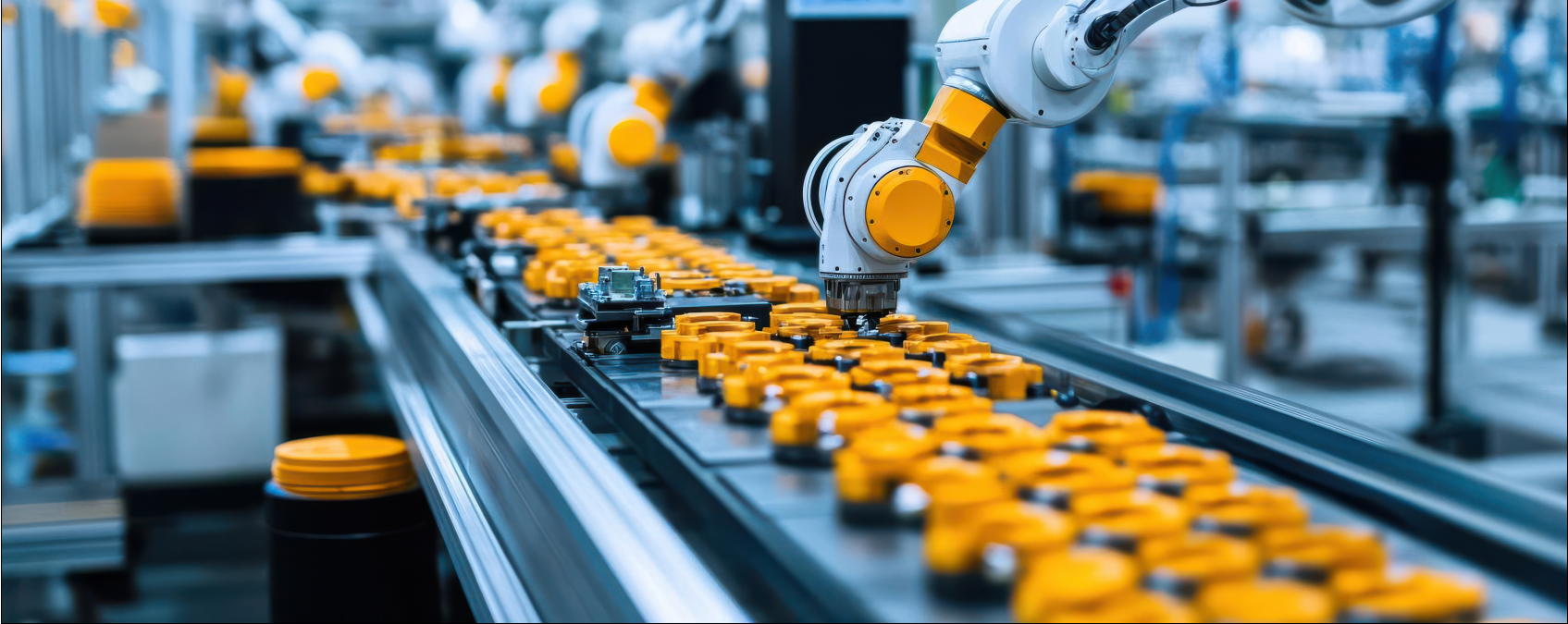 Robot vision systems are becoming increasingly powerful, with diffuse whole-scene analysis or pinpoint attention, depending on the nature of the application. Source: Emma/Adobe Stock
Robotic vision systems at work
Robotic vision, or machine vision systems, integrate cameras, sensors and computational algorithms/analytics and data oceans for identification and orientation purposes. This provides robots with the ability to "see" and interpret their surroundings and differentiate objects within them, to understand how to manipulate the environment.
These systems are designed to process vast quantities of visual data, enabling robots to perform intricate and complex tasks that require accuracy, adaptability and real-time decision-making.
Core components of robotic vision systems:
Cameras and sensors: High-resolution cameras and 3D sensors such as radar/lidar or ultrasonics to capture detailed visual and distance data, including color, texture, depth and motion.
Lighting systems: Effective illumination ensures consistent and accurate image capture, minimizing errors caused by shadows or reflections.
Image processing software: Algorithms perform rapid and real-time analysis of the combined visual and depth data, to identify objects, measure dimensions and detect orientations, center of gravity, defects or geometrical/positioning risks.
Computational hardware: Advanced processors and GPUs undertake real-time data analysis and decision-making algorithm operations to turn the field of data into an understood operational space.
AI and ML models: These enhance the system’s ability to recognize patterns, learn from data and adapt to changing conditions. This can be particularly significant where the vision system feeds into an active handling process, where balance, orientation, grip and relative motion interference risks must be assessed and integrated.
Key capabilities of advanced vision systems
Modern robotic vision systems have made significant strides in the past five years, enabling robots to reliably handle complex and precise tasks. Using advanced technologies like stereoscopic cameras, ultrasonics and lidar sensors, these systems capture 3D data to understand spatial distances and environments. With AI, they can identify and classify objects based on shape, size and texture, even in cluttered or dynamic settings. Coupled with mass data lakes, these systems achieve intricate object recognition while seamlessly integrating handling and balance data.
Real-time data processing is another strength, allowing robots to be responsive to changing parameters. This is essential in manufacturing, where precision and adaptability can vastly improve product quality control. ML enhances this adaptability further, enabling vision systems to improve over time by learning from previous errors.
Robotic vision systems have also recently expanded beyond visible light. By analyzing infrared, ultraviolet and polarized light, they can detect defects and assess risks previously invisible. Sub-millimeter accuracy supports applications like quality control for precision manufacturing in healthcare devices.
The integration of neural networks and edge computing also play a role in these systems. Neural networks, combined with deep learning and vast databases, exponentially improve recognition capabilities. Edge computing enables low-latency data processing at the source, ensuring real-time responsiveness. Finally, compact and energy-efficient designs are enabling new platforms and use cases, such as drones and wearable robotics.
Applications of robotic vision systems
The versatility of advanced robotic vision systems has led to their adoption across most sectors and industries that employ automation. Some key applications where these systems are driving innovation and efficiency:
Automated quality inspection in manufacturing
Detecting defects in products during manufacture is pushing the envelope in robotic vision systems.
Typically, high-speed machine vision cameras capture images of products in real time. This feeds information into AI-enabled analysis identifies surface defects, dimensional inaccuracies or assembly errors. This is typically reliant on both a machine learning approach that receives training correlations from real-world human inputs, and a data-ocean review that allows a wide perspective in comparison of issues with historical experience.
This then directs a selection/correction/rejection stage in the production process that singles out faulty components for real-world analysis and rework/scrap or acceptance by exception that becomes ML training data.
This increases speed, accuracy and consistency, removing human error and variable judgement in inspection. Fast and repeatable assessment of quality improves production efficiency by detecting defects early in the process and moderating up-stream issues in real time. This greatly improves compliance with strict quality standards (ISO, Six Sigma, etc.).
In the automotive industry, robotic vision inspects welds, paint quality and assembly alignment, ensuring defect-free components before final assembly. When faults are identified, the information can quickly feed back to the relevant stages to alter details of production before additional faulty product is created.
Vision-guided robotic surgery
Enhancing precision in minimally invasive surgeries is a significant benefit to patient outcomes. While truly robotic surgeries are still in the research stage, minor interventions such as skin tag removal and blood sample collection are close to exiting the evaluation phase.
High-definition 3D cameras provide detailed, magnified and beyond visible spectrum views/data about the surgical area. AI-driven robotic surgery equipment uses this real-time visual feedback to guide surgical tools with sub-millimeter accuracy and to alter approaches on-the-fly in response to actual conditions.
The same vision systems are used by Waldo-surgical equipment (pre-robotic machines with human operators) to inform surgeons in their control of near-robotic systems, performing delicate procedures with minimal invasiveness and improved patient outcomes.
This improves precision and control, reducing human hand tremors and offsetting vision difficulties by enhanced views and VR equipment.
This allows for remote surgery, expanding access to specialized medical procedures as the surgeon need not necessarily be in the same place as the patient, assuming sufficiently reliable data connection.
The Da Vinci Surgical System uses robotic vision for procedures like cardiac, urological and orthopedic surgeries, improving outcomes and reducing hospital stays. While human controlled, these devices are the harbingers of the truly robotic processes that are in research now.
Autonomous warehouse and logistics management
Fast and high-resolution vision systems are enabling robots to navigate, pick, and sort packages in fulfillment centers.
Vision-equipped autonomous mobile robots (AMRs) scan barcodes, RFID tags, product shapes, packaging details and other identifying data to differentiate objects with high reliability and speed. 3D depth cameras and LiDAR sensors allow robots to map environments, make pickup decisions for balance/grip, navigate mixed human/robotic environments and avoid obstacles to enable faster travel.
The vision data feeds into AI algorithms for pickup and the optimizing of path planning for efficient sorting, picking, and inventory tracking. This reduces reliance on manual labor, improving speed and cost-efficiency. It greatly increases warehouse storage utilization by enabling dense stacking of goods, where no human access is required — and it allows lights-off operations requiring lower power usage overall. Perhaps most importantly it enhances real-time inventory tracking, reducing errors in order fulfillment.
Amazon’s robotic warehouses use vision-guided robots for sorting and transporting packages, enabling faster order processing with much reduced human intervention.
Challenges and solutions
Despite their potential, robotic vision systems face several challenges. High initial costs are countered progressively by advances in manufacturing and increased adoption, driving increased uptake, making systems more accessible to smaller businesses. Complex integration is countered by increased standardization of interfaces and by modular designs that simplify integration into existing robotic platforms.
Data overload is influenced by efficient data processing techniques, such as AI-driven analytics and edge computing, reducing the burden on central systems. Environmental sensitivity can be reduced by more robust designs and adaptive algorithms that deliver more consistent performance under varying conditions. Skill gaps are prevalent, countered by training programs and user-friendly interfaces that ease the task of operators and technicians in maximizing system capabilities.
Conclusion
Advanced robotic vision systems are redefining the capabilities of automation in performing precision tasks. By equipping robots with the ability to perceive and adapt to their environments, these systems are unlocking previously impossible levels of efficiency, accuracy and versatility.
As technology continues to advance, robotic vision systems will play an increasingly central role in handling real world interfacing for machine environments, from manufacturing and healthcare to agriculture and beyond.
The transformative impact of these systems underscores their importance as a cornerstone of the Industry 4.0 and robotics revolution.
