
Modern warehouses are being confronted with a wide range of challenges: labor shortfalls, surging consumer demand, shifting customer expectations and persistent supply chain disruptions. Depending solely on manual workflows have become increasingly unfeasible in such volatile conditions. Consequently, it has become more common for organizations to pivot toward autonomous, data-driven platforms that can react in near real time to market fluctuations. Robotics is widely recognized as being at the forefront of this transformation.
By tackling repetitive, labor-intensive tasks, robots are instrumental in reducing order-processing times, refining inventory control, and easing workforce constraints. In contrast to older automation setups that rely on rigid infrastructures, newer robotics solutions are integrated more seamlessly with existing warehouse management and enterprise resource planning systems. They also can collaborate with human teams to enhance efficiency in picking, packing, and other internal logistics activities.
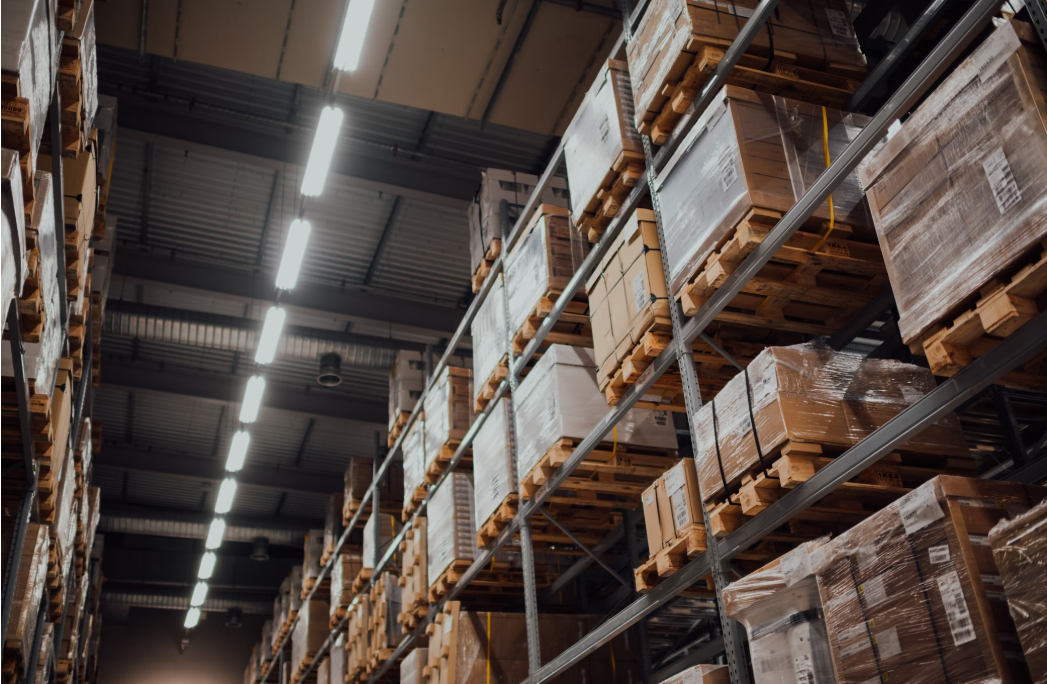 Logistics warehouse. Source: Unsplash
In practice, the adoption of robotics is no longer seen merely as an optional enhancement. Warehouses that invest in these technologies are typically better positioned to respond quickly and maintain cost-effectiveness, even as technology advances and the complexities of modern logistics intensify.
Key technologies in warehousing
Automated guided vehicles (AGVs) and autonomous mobile robots (AMRs)
AGVs and AMRs streamline the flow of goods across warehouse floors by reducing the need for manual labor for internal transport. AGVs move along fixed routes that are marked by magnetic strips or other predefined signals, making them well suited for structured environments. In contrast, AMRs navigate dynamically using LiDAR, computer vision, and simultaneous localization and mapping (SLAM), which allows them to optimize routes, avoid obstacles, and make real-time decisions. These features make them adaptable for high-throughput fulfillment centers.
Robotic picking and packing systems
These systems use robotic arms, computer vision, and deep learning to handle items of various shapes and sizes. They significantly boost order fulfillment speed and accuracy while lowering the occurrence of human error. By integrating with predictive analytics, robotic pickers learn from historical data and refine their grasping techniques, which keeps performance improving over time.
Collaborative robots (Cobots)
Cobots are designed to work safely alongside people. They can assist people for repetitive or physically demanding tasks such as lifting, sorting, and packing. Unlike traditional industrial robots that require fenced-off areas, cobots rely on force sensors, motion constraints, and machine learning models to maintain safety when operating next to human workers. They help warehouses optimize workflows and lower the chance of injuries caused by repetitive handling.
Automated storage and retrieval systems (AS/RS)
AS/RS setups automate high-density storage and retrieval by using shuttles, carousels or robotic cranes. This maximizes vertical space and cuts back on manual picking, which improves inventory accuracy and speeds up order processing. Many AS/RS solutions integrate AI-driven inventory allocation algorithms, placing items in optimal spots for faster retrieval and reduced energy consumption.
Benefits and challenges to adoption
Robotic automation in warehousing can deliver a wide array of advantages. One of the more notable benefits is the major jump in efficiency and speed: automated picking, packing, and sorting typically cut cycle times drastically, which boosts overall throughput. Robotic systems also tend to uphold high accuracy and consistency, helping reduce mispicks and returns. For businesses coping with labor shortages or seasonal swings in demand, robots help cut back on temporary hiring while lowering overall labor costs. Another significant plus is improved workplace safety. By taking over repetitive lifting and other physically exhausting duties, robots relieve workers of tasks that can lead to injuries. Lastly, because many of these systems feature modular designs, they scale easily and companies can expand capacity without the usual disruptions tied to big operational changes.
However, the path to adopting robotics is not without complications. The upfront investment can be large, encompassing hardware purchases, software licenses, and sometimes facility renovations. Even once the physical setup is in place, integration may not be straightforward. Managing data across warehouse management, enterprise resource planning, and other platforms often requires specialized technical knowledge. Training employees to operate and maintain these systems can be another hurdle, especially if the workforce has minimal experience with advanced automation. And, like any sophisticated technology, robotics demand ongoing attention, including regular firmware updates, predictive maintenance, and fine-tuning to avoid performance dips or unexpected downtimes.
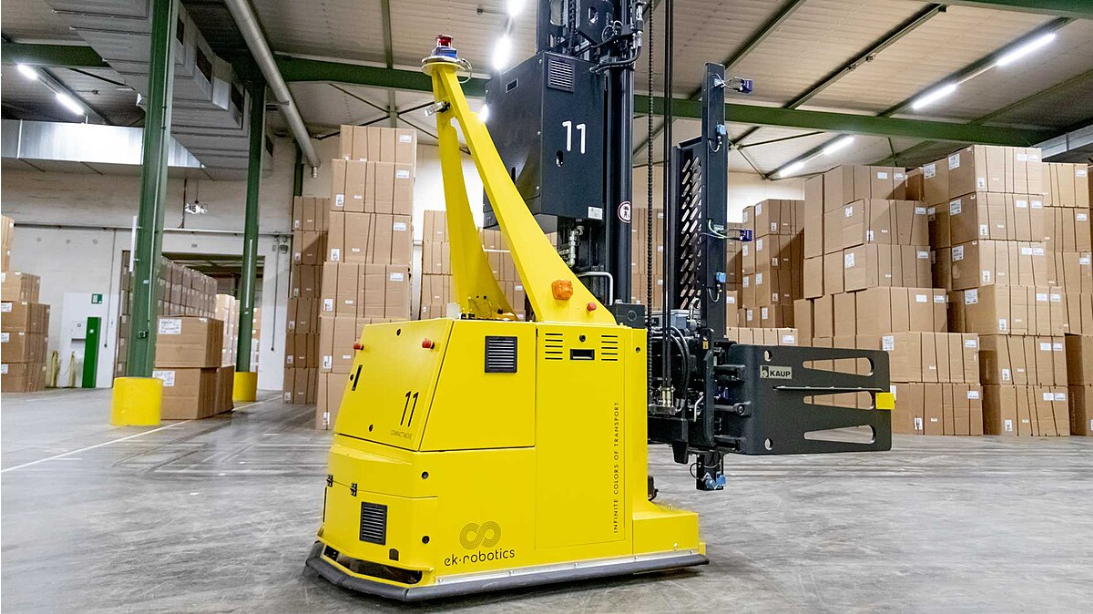 AGV compact vehicle. Source: ek robotics GmbH/CC BY-SA 4.0
Steps to integrate warehouse robotics
1. Conduct an operational audit and identify bottlenecks
A thorough assessment of current processes should be the starting point for any robotics initiative. By analyzing workflows in order fulfillment, material handling, and storage, managers can pinpoint inefficiencies and uncover areas where automation could provide the most benefits. Many analytics tools often help detect patterns of congestion, locate recurring errors and highlight potential problem areas that are not always readily evident.
2. Assess pilot programs and proof-of-concepts
After identifying specific bottlenecks, a contained pilot project can be created. Small-scale implementations allow you to measure real-world performance and gauge how well new robotics solutions integrate with existing warehouse management or enterprise resource planning systems. Using a smaller scale test in this way makes it easier to estimate return on investment, address technical challenges, and minimize operational disruptions before expanding automation.
3. Workforce training and change management
Even the best robotic equipment requires a team to operate and maintain it. Providing direct education and fostering a technology-friendly mindset are critical to successful adoption. Staff should learn basic troubleshooting, and safety protocols. Effective change management also reduces resistance to new processes and ensures smoother collaboration between workers and newly automated systems.
4. Select scalable and interoperable robotics solutions
Long-term success hinges on solutions that can evolve alongside an organization’s changing needs. These systems should feature robust API capabilities to connect with logistics software, use cloud-based monitoring for remote oversight and leverage AI-driven decision-making. Designing for flexibility ensures future upgrades or expansions can be more easily adapted.
5. Plan for continuous optimization and AI enhancements
Implementing robotics requires continuous improvement. Ongoing performance monitoring and using real-time analytics and predictive maintenance, lets organizations refine robotic efficiency, reduce downtime and upgrade capabilities over time. Integrating more advanced machine learning models can also yield better insights into inventory management and optimize broader supply chain operations.
Real-world impact and forward-thinking trends
The rise of robotics in warehouses is very visible in industries such as e-commerce fulfillment, where autonomous mobile robots handle large volumes of orders and urgent turnaround times. Major retailers and logistics firms rely on AI-enhanced picking stations that improve speed and minimize errors, even with extensive SKU assortments.
Cold-storage facilities, which pose harsh conditions for human workers, gain significant advantages from robotic automation that operates safely and efficiently at subzero temperatures. Industries like pharmaceuticals and food processing use sterile-capable robotic arms to comply with strict regulatory standards. Meanwhile, emerging fields like reinforcement learning, swarm robotics, and quantum computing hold promise for boosting warehouse operations even further.
Looking ahead
Robotic automation in warehousing has progressed from a convenient option to a vital strategy for enhancing supply chain resilience, reducing costs, and preparing for future demand. When AI-powered robots with advanced analytics are integrated, warehouses improve speed and precision. As adoption grows, businesses that invest early in these systems will be positioned to excel in an ever-changing logistics environment.
