
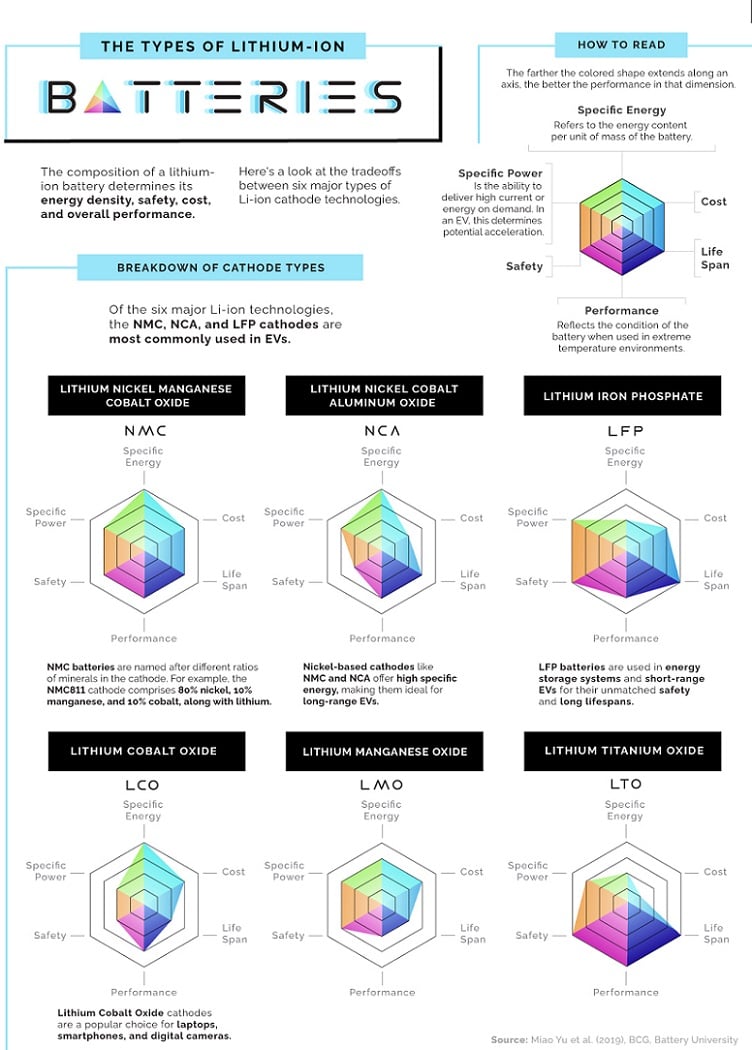
While lithium (Li)-ion batteries have emerged as the key technology powering electric vehicles (EVs) and energy storage systems, there are many types of Li-ion batteries, each with its advantages and drawbacks.
In Li nickel manganese cobalt oxide (NMC) batteries, the cathodes typically contain large proportions of nickel, which increases the battery’s energy density and allows for longer ranges in EVs. However, high nickel content can make the battery unstable, which is why manganese and cobalt are used to improve thermal stability and safety. NMC is the battery of choice for power tools, e-bikes and other electric powertrains.
Li nickel cobalt aluminum oxide (NCA) batteries share nickel-based advantages with NMC, including high energy density and specific power. Instead of manganese, NCA uses aluminum to increase stability. However, NCA cathodes are relatively less safe than other Li-ion technologies, more expensive, and typically are only used in high-performance EV models.
Due to their use of iron and phosphate instead of nickel and cobalt, Li iron phosphate (LFP) batteries are cheaper to make than nickel-based variants. However, they offer lower specific energy and are more suitable for standard- or short-range EVs. LFP is considered one of the safest chemistries and has a long lifespan, enabling its use in energy storage systems.
[Browse suppliers of these different battery systems on GlobalSpec]
Li cobalt oxide (LCO) batteries are highly energy-dense but are also characterized by a relatively short lifespan, low thermal stability and limited specific power. These batteries are a popular choice for low-load applications like smartphones and laptops, where they can deliver relatively smaller amounts of power for long durations.
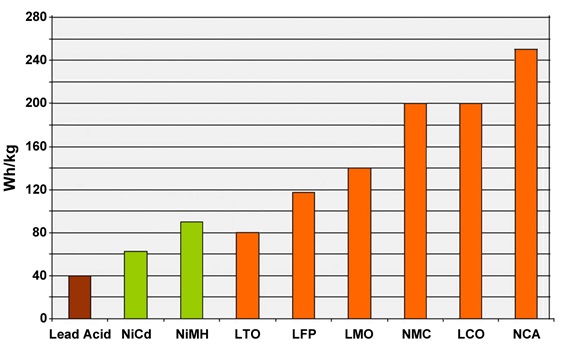 Typical specific energy of lead-, nickel- and Li-based batteries. Source: Electronics360 News Desk
Li manganese oxide (LMO) or manganese spinel batteries deliver enhanced safety and fast charging and discharging capabilities. In EVs, LMO cathode material is often blended with NMC, where the LMO part provides a high current upon acceleration, and NMC enables longer driving ranges.
Li titanate (LTO) batteries use a unique anode surface made of Li and titanium oxides. These devices exhibit excellent safety and performance under extreme temperatures but have low capacity and are relatively expensive, limiting their use at scale.
