
Apple Inc. has joined the new Sustainable Semiconductor Technologies and Systems (SSTS) research program launched by Imec, the nanoelectronics and digital technology research hub based in Belgium.
The SSTS program is the first initiative rallying stakeholders from across the integrated circuit (IC) value chain to anticipate the environmental impact of choices made at the chip technology definition phase. Using concrete and reliable models, and detailed (carbon) footprint analyses, the program will help the IC-making industry shrink its ecological footprint as part of the global fight against climate change, resource depletion and pollution.
The evolution of ever smaller, more powerful and increasingly more energy-efficient generations of chips has made smart devices progressively more sustainable. However, it is precisely the world’s growing dependence on semiconductor technology and its intricate production processes that have largely added to the IC-making industry’s own ecological footprint characterized by high energy consumption, greenhouse gas emissions and the use of chemicals, scarce materials and water resources.
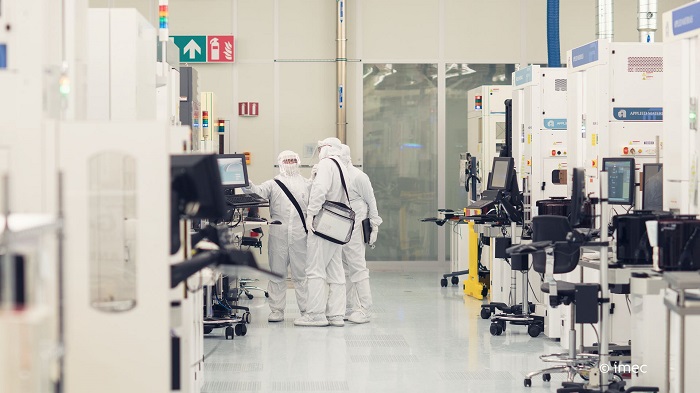 Source: Imec
To address these issues, fabs and equipment suppliers require a more sustainable IC manufacturing value chain. Research has shown, for instance, that close to 75% of a mobile device’s carbon dioxide emissions can be attributed to its fabrication — with almost half of that resulting from the underlying IC manufacturing. Yet, so far, a holistic approach to reducing the IC-making industry’s emissions has been lacking.
“That is why imec is launching its SSTS research program,” said Luc Van den hove, CEO of Imec. “It is a program drawing on our widely acclaimed fab expertise. It combines imec’s insights in infrastructure, technology and machinery to help the complete IC value chain reduce its ecological footprint. Our aim is to inform partners of the environmental impact of certain choices made at chip technology’s definition phase. That holistic view — consisting of concrete and reliable models, and detailed (carbon) footprint analyses — is what sets our SSTS program apart.”
