
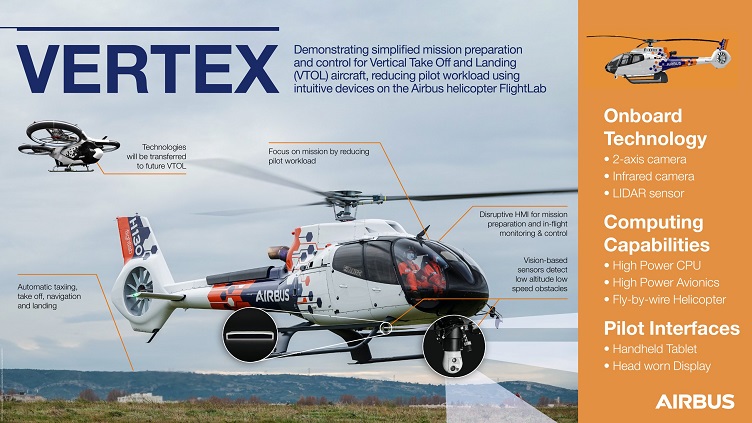
Autonomous flight will ultimately require enhanced sensing, perception and system-level capabilities for safety. To get there, Airbus is working with Luminar Technologies Inc. to use its lidar technology for future flight technologies.
Airbus UpNext, a subsidiary of Airbus, is fast-tracking new aircraft and services that will span across the company’s business and uses flight testing as the principal means of proving out a variety of future technologies.
The goal of Airbus’ helicopter called Flightlab, which was launched in January, is to increase aircraft safety and enable autonomous operation with automatic obstacle detection. The lidar sensors, which emit millions of pulses of laser light to detect where objects are by scanning the environment in 3D, will be key in enabling future aviation technologies including automation urban air mobility transportation modes as a central basis for safe takeoff, landing and in-flight decision making. It also has the potential to improve the safety of existing aircraft applications.
Luminar said the lidar technology that was originally built for the automotive space can be reapplied to the aviation industry, presenting a trillion-dollar opportunity. Airbus said adding lidar will help the company define and explore the next steps toward more autonomous flight vehicles of the future.
“We believe that automation and safety enhancements will transform how we move across all modes of transport as we take our technology from roads to the skies,” said Austin Russell, CEO and founder of Luminar Technologies.
