
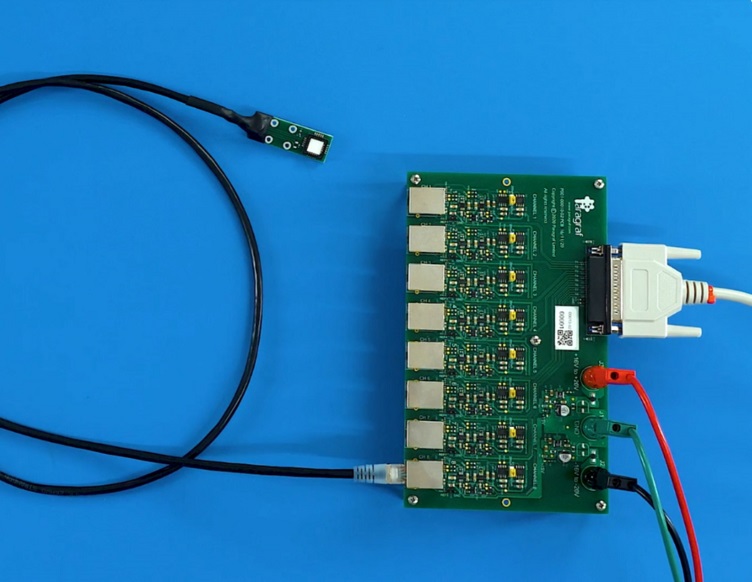
New graphene hall effect sensors from Paragraf have been developed for battery applications such as those in electric vehicles (EV).
The GHS01AT sensor can be used in low field environments and normal ambient temperatures, addressing monitoring tasks that conventional technologies cannot provide an effective solution for. The hall effect sensors can be used in battery cell analysis when investigating the validity of different battery cell chemistry derivatives and form factors under development. These magnetic sensors can get more detailed and localized understanding of battery cell behavior.
The sensors can detail real-time current density mapping with any variations at different locations in the cell being detected during repeated charge/discharge cycles of the battery. If hotspots develop, local mapping of the cells in these areas can provide insights into the physical processes. This could include early warning signs that could be monitored in service or scanned for during quality control. It could also provide the information required to help develop battery chemistries and design concepts that safeguard against the risk of possible failure or thermal issues.
Additionally, the GHS01At sensor can be used to measure the flow into and out of cells — an indirect means for measuring real-time magnetic field data. The graphene monolayer is not affected by the presence of in-plane stray electromagnetic fields that would impact the accuracy of alternative sensing mechanisms.
Paragraf is also offering a GHS Array Starter Kit that enables simultaneous measurements to be taken from up to 8 GHS01AT sensors. Each sensor is attached to a probe with a 1.5 meter serial interface cable and is accompanied by its own temperature sensor for temperature monitoring and temperature correct of the magnetic measurement data. The kit allows manufacturers through the initial stages before they implement larger-scale test rigs with a greater number of hall effect sensors.
"Motivated by demands to safely extend EV range and accelerate charging times, battery manufacturers are under intense pressure to develop higher performance products,” said Simon Thomas, CEO of Paragraf. “These need to be smaller and lighter, with heightened power densities and quicker charge responsiveness. To do this, they must have access to superior test data that they can analyze. Thanks to our GHS01AT, they now have the technology necessary for such an analysis."
