
Researchers from FAMU-FSU College of Engineering combined climate and land use projections to predict future water availability and needs for a given location. This would be useful for resource managers and land use planners as they navigate climate change. The new method could be used to generate future climate data using current hydrological models to accurately predict future water scenarios.
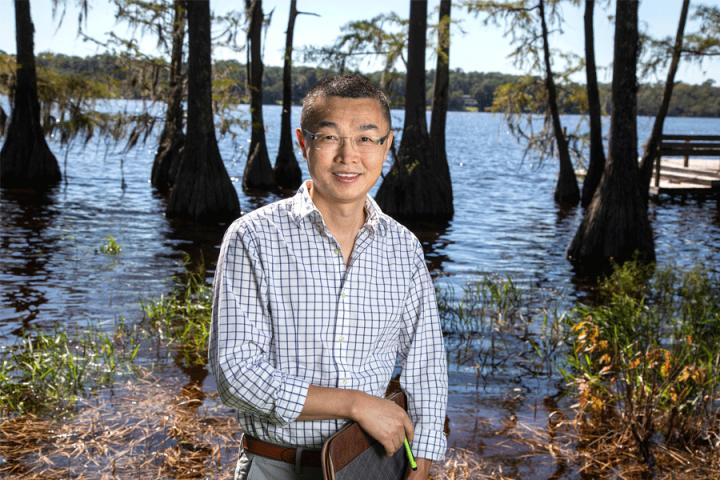 Gang Chen, a professor of Civil and Environmental Engineering at the FAMU-FSU College of Engineering. Source: Mark Wallheiser/FAMU-FSU College of Engineering
To create the new model, the team examined the hydrological processes in Alabama’s Upper Choctawhatchee River Watershed, which flows into Florida and empties into the Choctawhatchee Bay. Researchers integrated land use projections with future climate data to study their combined effects on the watershed’s hydrological response. Water balance simulations were used to show that surface runoff and evapotranspiration are dominant pathways for water loss in the Southeast.
Researchers investigated the combined efforts of land-use changes and climate change using their projections and they had interesting results. The model showed that the effects on water resource variables are seasonal and surface runoff caused the most significant changes in most of the simulations. It showed that evapotranspiration is an issue, but less than they thought. They also found that more frequent extremes in water balance will become an issue for water access in the future.
The team says that their work can be applied on a larger scale beyond a single watershed.
The study was published in Water.
