In the world of wholesale energy, electricity price volatility is a major problem, as it cannot be stored and must be generated whenever there is a demand. The increased demand puts stress on generating power stations, which are already running at their full potential, so the stations require installation of new equipment and maintenance of current ones.
However, energy prices are also exacerbated by a period of low rainfall, sparkling summer temperatures, dry fronts and private power markets. Customers want to prevent and handle their heavy electricity bills. That is where the demand response programs come in.
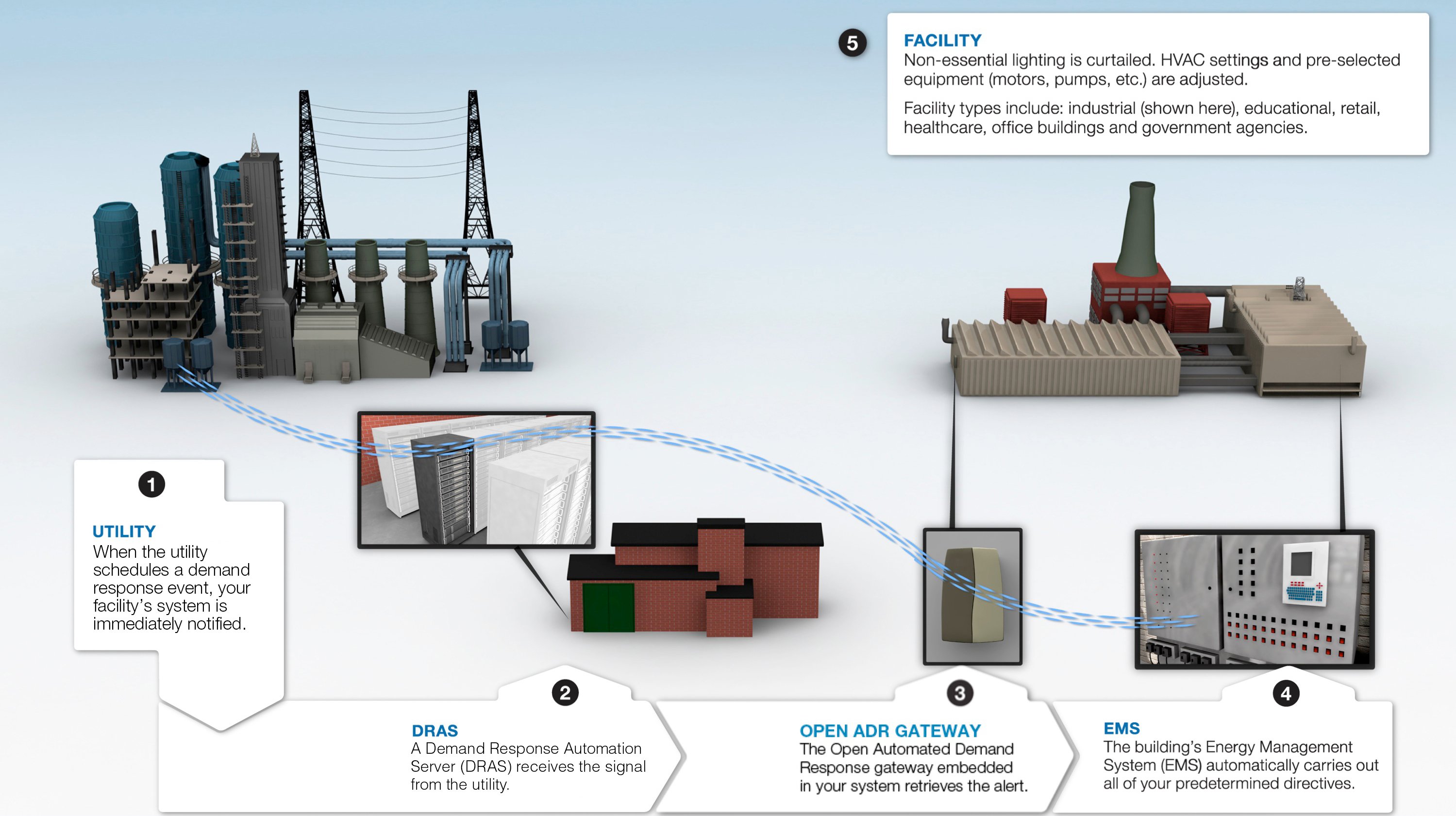 Figure 1: Demand response programs are used by residential, commercial and industrial customers to reduce grid load during peak demands. Source: Honeywell International Inc / CC BY-SA 4.0
Demand response programs
The U.S. Department of Energy defines demand response as "a tariff or program established to motivate changes in electric use by end-use customers, in response to changes in the price of electricity over time, or to give incentive payments designed to induce lower electricity use at times of high market prices or when grid reliability is jeopardized.: Customers may respond in three ways to DR programs. They can reduce their energy usage in peak demand hours or they can transfer their peak load to off-peak hours. Finally, customers can also respond by using backup generators during peak hours instead of using electricity from the grid. All these behaviors will lead to flattened load curves and on to successful use of demand response programs. Backup generation is usually not preferred because it can cause pollution problems if generating energy is not environmentally friendly.
New peak-power plants: Not an option
Demand response programs curtail load during peak hours so new peak-power plants can be an option. But by doing so there will be extra unused energy and fixed electricity costs during off-peak hours. Investors do not want to buy in to such expensive power plants, because even the high price of electricity during peak hours will not compensate for the huge capital costs, as peak-hour power plants are only in operation during peak hours. Few hours of operation per year results in very little or no revenue. In general, load relief demand response programs are of four types: reliability-based, market-based, direct load control and time-based price programs.
Types of demand response programs
Reliability-based programs are initiated when there are emergency conditions such as a sudden supply-demand gap or transmission constraints – and also known as the contingency or "call" type. They can provide greater and predictable peak load curtailment. Market-based programs, also known as "quote" programs, are voluntary programs that depend on changes in overall market prices. The incentives offered in quote programs are lowered electricity bills and in "call" type programs price money is offered according to peak load curtailment in kW. Market-based programs provide less load relief because they are voluntary and cannot determine how much customers participate, or how much load is cut, as there is no contract previously signed between the companies and customers. It also means that utilities cannot penalize customers if they are providing lower relief, but this is not the case with contingency-based programs in which customers first have to tell how much load they are cutting, and then they are penalized if they fail to do so.
Direct load control-based demand response systems are not under the influence of consumers once the contract has been signed. Electrical utilities control the power usage of stated electrical devices in this kind of program up to a maximum number of pre-declared hours in the contract. Although this type of demand response program is reliable, the equipment that needs to be installed at the customer end is quite expensive. Instead, electrical utilities also provide incentives to DLC consumers. The time-based demand response programs can be split into time-of-use (TOU) programs, real-time pricing (RTP) programs and critical peak pricing programs. Real-time pricing is likely the most efficient.
In real-time pricing, consumers are expected to change their load shape by transferring loads from to off-peak from peak hours. This is ideal because the price of electricity varies all day long, with the most expensive peak hours and off-peak hours charged at normal rates. Meters are installed at the customer end to communicate to the customers hourly or daily prices.
Customers are attracted by the idea that they can reduce their electricity bills if they handle their resources well. This sort of demand response program will therefore really help to change a large region's load curve and thus also reduce overall energy use. There are also chances that during the low-price hours, consumers can use more load and thus result in a general increase in energy demand, which is another concern. The critical peak pricing (CPP) program applies to voluntary market-based programs that send out early notices to customers about expected critical peak times so that they can plan the load management.
Some misconceptions
There are some misconceptions that participation in a demand response program causes business disruptions. This is not true. Typical programs take just two to four hours and arise a few times a year, so business disruption is small and balanced by insurance. As a reputable DR customer, you can help to create a strategy that works for your company.
For instance, you can choose to cut just a part of the lights. There is another misunderstanding that registering for DRP requires legal agreements and complex contracts. The converse is true. If the customer decides to collaborate with a partner, the customer gives the utilities permission to interact on their behalf with the partner. Lastly, customers also think they are exposed to financial risk by involvement in DR programs. As already discussed, most utility services offer high incentives for participation. If a plant working with a partner, they will bear a large proportion of the financial risk, providing a significant upside gain.
Demand response programs are not recent, but it is now gaining considerable momentum and more acceptance as grid demand continues to grow globally, and because of the emergence of new carbon-neutral technologies. Such programs are a positive for everyone: a victory for the utility for ensuring a proper supply of power and infrastructure stability, a victory for plants because of revenue streams, and a victory for the economy.
