
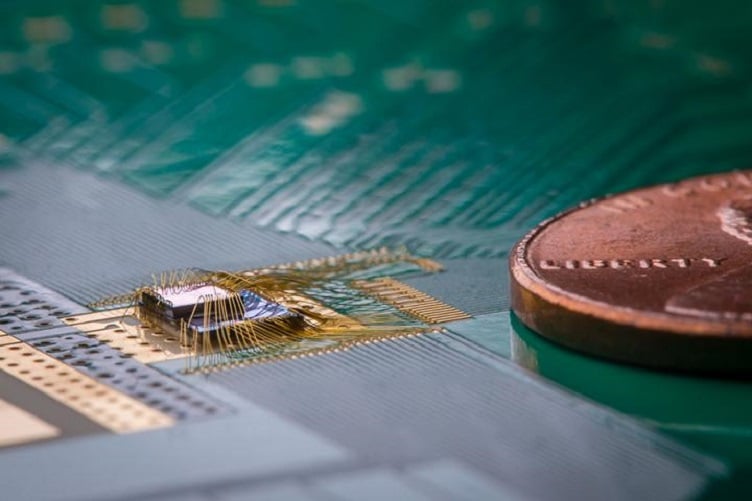
Researchers from the University of California (UC), San Diego, have developed a power saving chip that could significantly reduce or even eliminate the need to replace batteries in internet of things (IoT) devices and wearables.
The wake-up chip only wakes up a device when it needs to communicate and perform its function and keeps the device dormant the rest of the time, thereby reducing power use. The chip would be most useful in IoT devices because they don’t always need to be transmitting data or in wearables that only take readings a few times a day.
"The problem now is that these devices do not know exactly when to synchronize with the network, so they periodically wake up to do this even when there's nothing to communicate. This ends up costing a lot of power," said Patrick Mercier, a professor of electrical and computer engineering at UC San Diego. "By adding a wake-up receiver, we could improve the battery life of small IoT devices from months to years."
The chip continuously looks for a specific radio signal, called a wake-up signature, which tells the chip to wake up the main device. It generates just 22.3 nanowatts (nW), about a half a millionth the power it takes to run an LED night light. The receiver’s design targets higher frequency radio signals such as those in the 9 GHz band, which is in the realm of satellite communication, air traffic control and vehicle speed detection.
This allowed researchers to shrink the antenna, transformer and off-chip components into a smaller package, about 20 times smaller than previous nanowatt semiconductors.
Additionally, the chip performs in a wide temperature range from 14° F to 104° F, which is important because temperature drops sometimes cause wake-up receivers to lose performance.
However, there is a small tradeoff in latency with a 540 μs delay between when the receiver detects the wake-up signature and when it wakes up the device. For the intended applications, this amount of delay is not a problem, researchers added.
"You don't need high-throughput, high-bandwidth communication when sending commands to your smart home or wearables devices, for example, so the trade-off of waiting for a mere half a second to get a 100,000x improvement in power is worth it," Mercier said.
