
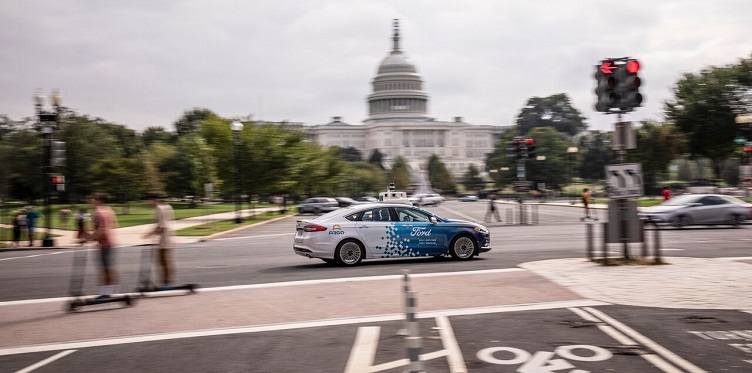
Hot on the heels of Ford Motor Company’s announcement this past summer that it would be investing some $4 billion into autonomous driving technology through 2023, the company will expand its test fleet to Washington, D.C.
The company has already been testing its autonomous vehicles in Detroit, Pittsburgh and Miami, with the goal of expanding to Washington D.C. to test how to fill in the gaps in a city where public transportation can’t serve all people, as well as expanding new opportunities for how food and other goods are delivered.
Ford said it is working with local officials to ensure the vehicles are testing in all eight of the District’s wards as Ford works toward deploying a commercial service by 2021.
“We believe that ensuring widespread access to mobility services enabled by self-driving vehicles is vital, a sentiment that was underscored in a report by Securing America’s Future Energy, which found that autonomous technology could improve people’s access to jobs as well as retail markets,” said Sherif Marakby, CEO of Ford Autonomous Vehicles, the newly created division that is part of the $4 billion investment.
Ford is partnering again with Argo AI — which it invested $1 billion in last year — which already has vehicles on the streets to map roads as a first step toward the testing of the self-driving cars. Ford said in the next year it will grow its fleet and expand testing areas in Washington D.C. to include the downtown core.
In order to manage the fleet on the ground, Ford will establish an autonomous vehicle operations terminal in Ward 5 of the city. The terminal will manage the development process of the testing, house the fleet, wash the sensors and clean the vehicles. The terminal will also be responsible for routine maintenance and troubleshoot any potential problems.
Ford chose Washington, D.C. because it is one of the largest markets in the U.S. with a population that is growing significantly, particularly during working hours as people commute from the suburbs or take the subway. Also, the city gets visited by millions of tourists every year, which increases demand for ride-hailing and delivery services. The company believed this to be a prime spot filled with numerous opportunities for self-driving cars.
