
Sponsored Content
Industrial & Medical Technology
How the Canadian Electric (CE) Code has Evolved to Address Clean Energy Technologies
21 March 2018
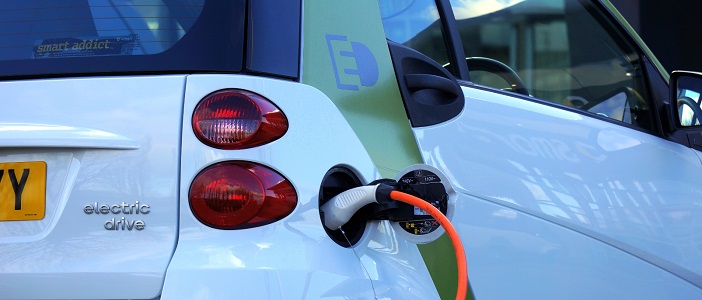
Over the years, the CE Code has been adapted to address new and emerging clean energy technologies.
Sponsored content
In recent years, the development and proliferation of renewable energy technologies coupled with advances in battery storage have enabled home and building owners to increasingly capitalize on clean energy sources, such as wind and solar. From electric vehicles (EVs), to rooftop photovoltaic (PV) systems, to small-scale wind turbines, the utilization of renewable power systems both residentially and commercially is more prominent than it has ever been.
While this has produced many benefits for consumers, the environment and society as a whole, it has also presented new and unique challenges with regards to the safe installation, use and maintenance of emerging technologies. Additionally, it has forced regulatory bodies to amend longstanding building codes, to which electricians and installers must adhere.
Over the past six years, numerous revisions and additions have been made to the Canadian Electrical Code, Part I (CE Code) to reflect these changes and address safety concerns. The remainder of this article will focus on some of the most notable revisions, including the addition of Section 64, which covers installation requirements for renewable energy technologies, such as solar PV systems and wind turbines, as well as Sections 8 and 86, which have been revised to address electric vehicle supply equipment (EVSE).
Solar PV Systems
The 24th edition of the CE Code, which was released this past January, outlines new requirements for solar PV systems. This includes increasing the voltage limit of PV systems from 1,000 to 1,500 V. To address the worker safety concerns this change has prompted, higher voltage systems can only be installed where qualified maintenance personnel are present. Additionally, parts of the installation exceeding 750 V must be inaccessible to the public. The use of specific voltage warning signs has also become mandatory.
Appendix B provides guidance on the phrase “inaccessible to the public” by stating that: “The PV source and output circuits, along with equipment connected to or within those circuits, must be located within a fenced enclosure in accordance with Rule 26-300; guarded by locked doors; elevated three meters or more above grade level, or above any surface upon which a person could stand; or located where access is restricted by other effective means.”
Similarly, the 2018 version of the CE Code includes guidelines for the installation of combiners and recombiners, which are often present in large-scale PV systems. Rule 64-060(12) applies to PV combiners. For recombiners that are installed in excess of 7.5 meters from the inverter, a single disconnect means they are capable of being opened at the ampere rating of the inverter input circuit installed. The installation requirements are the same for both combiners and recombiners.
Small- and Large-scale Wind Energy Systems
Section 64 of the CE Code classifies wind systems by size. Large systems are those that have a rated output over 100 kW, while small systems are rated up to (and including) 100 kW. New definitions have also been added for the wind turbine, electrical systems, wind turbine generators and terminals.
Electrical Vehicle Supply Equipment (EVSE)
In recent years, the number of EVs on the road has risen substantially. As the majority of EVs are charged at private residences, many regional regulatory bodies have revised building codes to ensure safety. Ontario, for instance, made changes to its building code in 2017 to help create EV-ready homes and workplaces. These changes took effect January 1, 2018. Similarly, in Quebec the capability to charge 240 V electric vehicles has been mandatory for all new residential construction since 2016.
“Electric vehicle supply equipment EVSE can draw a substantial load when in charging mode. For existing buildings, the addition of EVSE can result in the total load exceeding the existing service capacity. In such cases, the first option is to increase the service size. A second option is to install a system to monitor the power being drawn by EVSEs and other building loads, and control the EVSE loads such that the overall load does not exceed the limits of the existing service, feeders and branch circuits. In combination with Section 86, along with new Rule 8-500 and new subrules 8-106(11) and (12), these systems are now recognized in the code as Electric Vehicle Energy Management Systems (EVEMS). Complementary to the introduction of EVEMS, a new table of loads and demand factors has been added specifically for EVSE.”
Understanding Key Changes to the Code
Designed as a model code for electrical safety and developed with the participation of all Canadian regulatory authorities, the CE Code enables electrical and construction businesses across Canada to remain competitive, while facilitating inter-provincial trade, labor mobility and most of all, safety.
CSA Group offers training and support products to help users understand and apply key changes and updates from the CE Code. For example, the Renewable Energy 2018 training course reviews the technologies and innovations that Canadians are using for sustainable energy independence. This course covers the requirements for renewable energy systems, including the different types, system components and functions, and maintenance, safety and operation.
There is also the Detailed Overview of Changes course, which offers an in-depth overview of more than 60 code changes, available in workshop, online or onsite formats. All course content is conveyed through scenarios, activities and real-world examples.
Simply put, CSA Group is helping to keep Canadian electricity safe and efficient by making regulatory changes easy to understand and reference.
Powered by CR4, the Engineering Community
Discussion – 0 comments
By posting a comment you confirm that you have read and accept our Posting Rules and Terms of Use.
Advertisement
Advertisement
Popular News
Find Free Electronics Datasheets

Advertisement