
Eye movement detection technology used in virtual and augmented reality applications relies on high-resolution 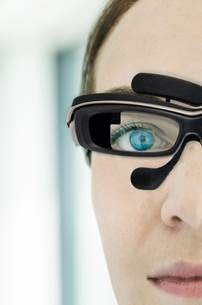 The technology could lead to low-cost augmented reality and virtual reality applications. (Source: imec)cameras embedded in eye-tracking screens or glasses. Camera-based solutions can accurately determine where users are looking, but most cameras’ frame rates are not fast enough to match the eye’s most rapid movements, such as saccades – a typical movement during reading. A camera system that matches the eyes’ speed would significantly increase the already high cost of these devices and could have implications for their commercial use.
A solution from imec (Leuven, Belgium) and Holst Centre (Eindhoven, the Netherlands) uses electrical sensing to detect eye movement in real-time. This inexpensive alternative solves the issue of image processing delay.
The new sensors were integrated into a set of glasses with four built-in electrodes around each lens – two to pick up the eye’s vertical movement and two for horizontal movements. An advanced algorithm was also developed to translate the signals into a concrete position, based on the angle the eye is making with its central point of vision.
The technology also offers insights on the eye’s behavior, such as the speed of movement or the frequency and duration of blinks. Other possible applications for this technology include a complement to current camera-based solutions, potentially developing cheaper and faster eye-movement detection devices.
Currently being tested and showing promising results on eye behavior and blink detection, users are able to interact with screens by moving the cursor with their eyes and using different blinking patterns for distinct actions, such as selecting files, drag-and-dropping, or opening and closing applications.
