
A team of researchers, led by Linke Guo, assistant professor of electrical and computer engineering at Binghamton University has developed an app that blocks third parties from identifying an individual's location based on what they search for online.
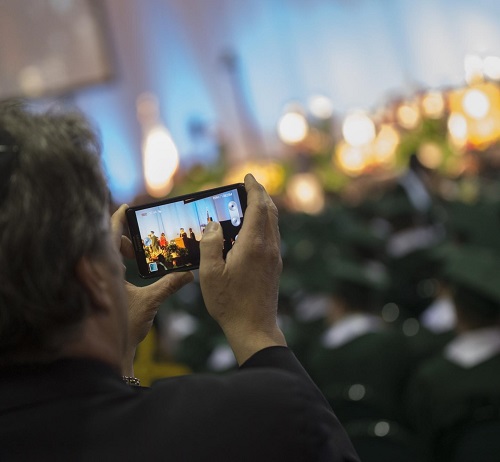 Researchers have developed an app that blocks third parties from identifying an individual's location based on what they search for online. (Source: Jonathan Cohen, Binghamton University) "This is really attached to daily life," says Guo. "The trend of people using searches and social networks on smartphones which aren't well-protected is going up. Sometimes people share too much information. This is a way to help provide some security."
Since Internet users are constantly frequenting sites like Facebook and Twitter, where they provide large amounts of data to service providers – uploading photos, location information, activity updates, there is always a chance that the information could be used in the wrong ways.
According to the researchers, smartphones send data to servers in the background of local searches, GPS directions or check-ins for foodie apps. If the app developed by Guo and the team is developed further, it could help hide that information.
The app is not currently available to the public, but it may be in the future.
"When we release personal information to the Internet, it is out of our control, and can be easily searched and used for malicious purposes," says Guo. "We are trying to provide a more efficient and feasible solution to make sure that kind of information is secure."
The team’s paper received a Best Paper Award at the Institute of Electrical and Electronics Engineers (IEEE) GLOBECOM Conference, Symposium on Communication & Information System Security, in San Diego on Dec. 7 for their paper titled "Privacy-preserving Verifiable Proximity Test for Location-based Services." The team’s one paper was honored in 12 different categories at the conference.
