Manufacturers face a shrinking skilled workforce and a growing flood of machine data, and two presentations at Pack Expo at McCormick Place in Chicago examined how artificial intelligence (AI) and better data practices can help close that gap. Justin Garski, OEM segment leader at Rockwell Automation, and Matt Lueger, executive vice president at NorthWind Technical Services, approached the topic from different angles. Both speakers argued AI delivers value only when it understands the operation it serves.
Workforce gap drives the data conversation
Garski opened his session, "Making Machine Data Work for Your Workforce," by describing a workforce in decline as experienced employees retire or pass away. He said the industry effectively skipped a generation after years of telling young people that manufacturing was dull, dirty, and dangerous. Low fertility rates compound the problem, while unemployment sits near an all-time low, which leaves manufacturers competing for a limited pool of workers.
Garski referenced a hospital scene from the film "Idiocracy," in which staff rely on simple button pressing. The point, he suggested, is that systems must carry more of the knowledge burden as experience leaves the plant floor.
Lueger reached the same starting point in his session, "Integrating AI into Your Plant Operations," which targeted small and medium businesses. He identified the shortage of skilled labor as the largest issue facing manufacturing today, one that limits capacity, efficiency, and growth. NorthWind's goal, he said, is to find ways to shorten that gap.
From automation to autonomy
Garski said smart manufacturing is powering a data explosion, and that shift is changing the relationship between OEMs and end users. Traditionally, an OEM built, installed, and commissioned a machine, then handed full responsibility to the end user. Any further OEM engagement happened on demand.
"Now, we're at a tipping point," Garski said. "OEMs have the opportunity to act as [an] operating arm."
He framed the larger trend as a move from automation to autonomy. An automated system follows programming to perform tasks without human intervention, while an autonomous system learns to perform tasks and adapts to uncertain environments. Garski likened the progression to moving closer to lights-out manufacturing.
Progress stalls at the equipment level, however. Garski described OEMs and end users as locked in a digital transformation standoff, with the core challenge lying in integrating machines into the broader information environment.
Context makes OEE meaningful
Garski pointed to smart objects as one path forward, along with solutions for sharing structured machine data across systems.
"How do we make sense of them in a contextualized manner?” he said. “Do people know why a machine is stopping today?"
A single stoppage can trigger several faults, such as an overcurrent and an emergency stop, and someone must then work backward to determine which fault was the real cause.
Garski said every one of those details matters, but no one can digest them without the data behind them.
The same logic applies to overall equipment effectiveness (OEE). Garski called OEE the holy grail of plant metrics but said it means little without context. He recommended that manufacturers start by putting the information on a human-machine interface (HMI) to establish a baseline, which then allows teams to start getting answers. The next step involves using standard operating procedures to train models that run in the controllers themselves, an approach that can happen locally.
"There's no feelings. There's data. We need to use it," Garski said.
He cautioned AI alone will not fix the problem. Engineers first need to track the information and determine what it is supposed to do, with AI and machine learning offering more help in the future. Much of the needed data already lives in the controller, he noted, and plants should put it to work in the controller and the HMI today. Garski also said the industry must decide as a community how to handle remote connectivity, such as VPN access, and argued that the value will outweigh the risk. Plants that refuse to connect, he warned, will struggle to run their factories at all.
AI built around each role
As a system integrator, NorthWind focuses on matching software to operations through flexible, custom workflows. Lueger said the company needed a foundation and platform that was secure, customizable, and scalable, and data sovereignty mattered to both NorthWind and its customers. The company's PlantIQ platform grew from those requirements.
Lueger said issues occur at every level, from the floor to the front office. Complexity varies, but speed to resolution remains paramount, and AI can help at every level only if it understands the operation. "There's a lot of data that is utilizable," he said.
NorthWind structures its approach around one platform serving operators, maintenance staff, engineers, supervisors, and managers, each with different priorities. At the operator station, AI helps workers understand issues they have never encountered by supplying context through a prompt.
Maintenance personnel can review every alarm that occurred and ask the AI to diagnose the event, which returns a root cause analysis and recommended steps. Lueger described the exchange as an iterative conversation that helps technicians dig beneath the symptoms.
For process engineers hunting bottlenecks, Lueger showed a recipe management example that applies to batch or continuous processes. The system analyzes errors and issues, then delivers insight and recommended actions. An uptime report built from batching records provides daily analysis, production trends, and recommendations that Lueger described as actionable.
Supervisors typically interpret plant performance through dashboards. With a large language model (LLM) layered on top, they can pull key metrics, status breakdowns, and notes, then ask more specific follow-up questions. Lueger said the tool helps supervisors share targeted insights with personnel in both directions.
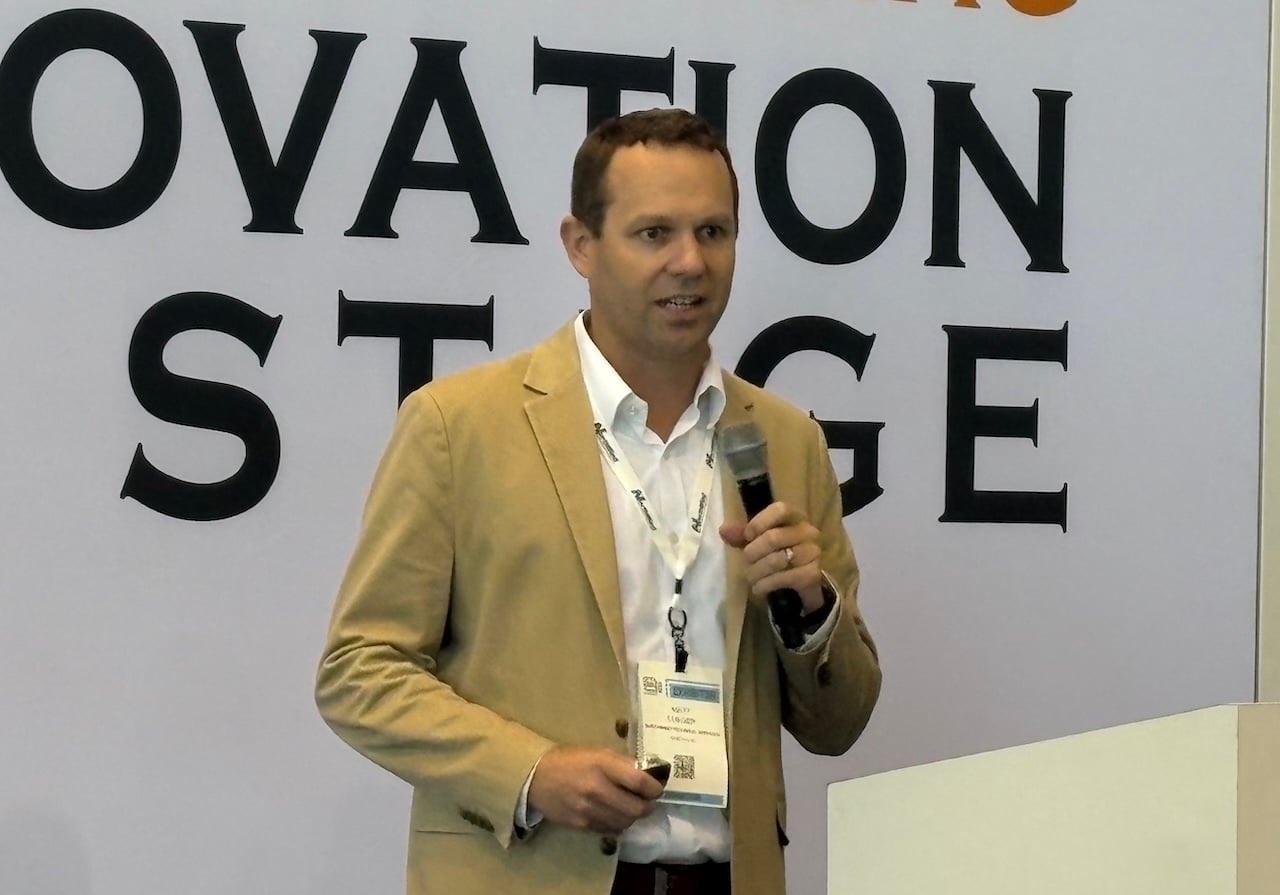 Matt Lueger, executive vice president at NorthWind Technical Services
From reactive reporting to plant intelligence
At the management level, Lueger said the goal shifts from reacting to events to anticipating them. Managers want to know what will happen before it does, while most of the tools used at other levels remain reactive.
Lueger said they use with a deterministic algorithm for schedule prediction and improvement. Lueger acknowledged the idea sounds elementary, but he said gathering all the relevant information in one place almost never happens. The system generates a production plan from that combined data, then overlays AI insights on top of it.
He illustrated the approach with a production scheduling case study, one of manufacturing's most persistent challenges. The implementation reduced schedule development time and the number of production changeovers.
Implications for engineers and manufacturers
Both sessions landed at the same general conclusion: AI succeeds on the plant floor only after the underlying data is structured, contextualized, and accessible. Garski urged engineers to start with the controller and HMI data they already have, establish baselines, and understand what the data means before expecting AI to deliver answers. Lueger showed what becomes possible once that foundation exists, with role-specific AI tools that shorten troubleshooting, expose bottlenecks and inform scheduling.
For OEMs, the shift toward acting as an operating arm creates new service opportunities but also requires decisions about secure remote connectivity. For end users, particularly smaller enterprises, the message centers on choosing secure, scalable platforms that effectively control plant data.
Lueger said about extending workforce expertise, “Are you elevating your best assets, your people, to get the most out of your operations?”
Both presenters argued it’s possible, but they need the right information in front of them to take the next step.