
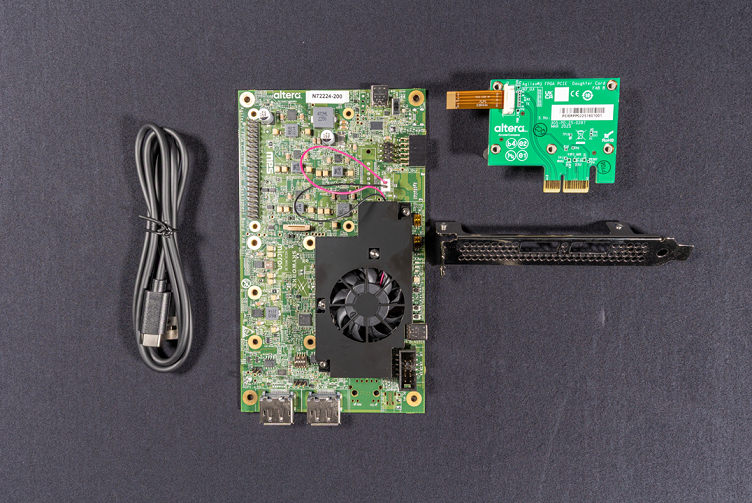
About one year ago, Intel Corp. completed its sale of 51% of Altera Corp. to Silver Lake.
Over the course of the last year, the San Jose, California-based field-programmable gate array (FPGA) vendor has flourished as a separate entity, according to Mike Fitton, vice president of marketing at Altera.
While Intel retains a 49% stake in Altera, the company has been left to its own devices and in the process its flagship Agilex family of FPGAs is now twice the performance per watt compared to other devices, Fitton said.
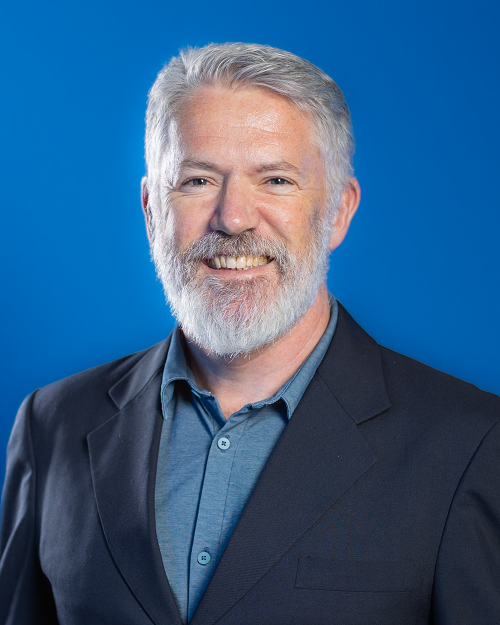 Mike Fitton is the vice president of marketing at Altera.“It's an exciting time to be with Altera,” Fitton said. “No disrespect to Intel, they've got their own business, but FPGA companies are much better served being independent, in my view. Intel wanted us to be a kind of bench player supporting communications and data center compute, but there's so much more to FPGA than that.”
And being owned by New York City-based investment firm Silver Lake has been a foundation for growth, he added.
Fitton sat down with Electronics360 to discuss the last year not under the Intel banner, what the company is working on in the future, working with everyone from Nvidia to AMD and whether FPGAs will always be flexible.
Electronics360: Can you expand on how things have changed operationally since becoming independent, and why it's more exciting now?
Mike Fitton: I think it's just a lot more focus. A lot more focus on the core business from an FPGA point of view. FPGA is all that we do now, and there isn't the additional distraction of everything else. I think particularly the leadership and the team that Raghib Hussain [president and CEO of Altera] brought in a huge amount of engineering discipline.
We're ahead in the number of tape-outs, not pushed them out. I think it was five or six in the last year. That puts us in a great position from an execution standpoint, and it's about making sure we're solely focused on the FPGA part of it.
I think the dual-foundry strategy is working well for us too — we've got relationships with both TSMC and Intel. But having the choice to use TSMC or Intel, that kind of diversity, is super positive too, especially given the complicated geopolitical situation in the world right now. Having options is only ever a positive thing.
Electronics360: How does this free you up more now?
Fitton: Honestly, decisions get made so much faster now. A lot of the time, either Raghib will say yes, or he'll ask why I brought it to him and why I didn't just decide already. Decision-making is being devolved to the people best suited to make the decisions, which often times isn't me or people at my level, it's people much closer to the information, and we get empowered with that.
The other part of it is independence. We still get support from Intel, but we're not in that walled garden anymore, which means we can work with everybody. Frankly, I quite like being Switzerland — you want to be able to work with Intel, with Nvidia, with Broadcom, with ARM, with Analog Devices, with TI, even with AMD. Previously, when we were part of Intel, it was much more difficult to do that.
Electronics360: What role is Altera's FPGA playing in the data center market?
Fitton: It's a super exciting market.
We were always relatively successful in the DPU — data plane processing unit, as the rest of the world calls it; Intel called it IPU, infrastructure processing unit. How can I say this in a politically correct manner — most of the hyperscalers use an FPGA-based DPU, and most of those FPGAs are ours. Partly that's the performance leadership I mentioned, which is all about squeezing the most out of it, and partly it's being on the latest interface — you need to be on PCIe Gen 5 this generation with 400 gig Ethernet, next generation will be Gen 6 and 800 gig, and so on. We've been successful in that classic DPU market, with some differentiation and flexibility around things like OVS support and different workloads.
Then, because AI took off so dramatically, that same infrastructure play was still required — hyperscalers would often reuse the DPU they already had and repurpose it for optimizing AI workloads, and most of the time that was us too.
A good example is when Jensen talked about the Groq deal Nvidia made — if you look at that diagram, you can see the LPU from Groq, some other processing elements, and there's also an FPGA in there doing an amount of the processing. My view on this — and I always make this supposition — is that AI is like the gold rush right now, and there's lots of people out there prospecting for gold. Frankly, all we're doing here, at least with this specific socket, is selling data shovels and there's lots of other people using them to mine for AI gold. A little prosaic, perhaps, but I'm happy with it.
Electronics360: Can you walk me through where Altera is headed, target markets and performance direction?
Fitton: We see three redesign cycles going on. There's the obvious one around AI, but particularly physical AI and AI at the edge — distributing processing everywhere.
There's a second one about safety, as IT and OT converge, making sure we've got the right safety parameters and protocols.
And the last one, which I've been working on a lot recently, is security. If you look at something like the European Cyber Resiliency Act — legislation that applies if you're selling into Europe that any networked piece of equipment needs certifiable security built in starting December 11, 2027.
All three of those things mean there's a redesign cycle going on right now, because there are pieces of equipment out there that won't necessarily be ready. And that creates a ton of exciting opportunities for us. That's almost the opposite end of the spectrum from hyperscalers, which is dominated by a very small number of very large companies. This is a completely different sales motion — working through distribution, making sure we've got great out-of-the-box support for customers big and small doing new designs and redesigns across those three vectors.
Electronics360: Do you expect FPGAs to eventually become more of a hardened accelerator — say, five years out — or does the flexibility stay?
Fitton: It's a great question. Honestly, I've been in the FPGA industry for 22 years now, and people have been predicting the death of FPGA for about 22 years. There will be examples where things get hardened, and it'll be the right way to do it — if there's the ability to do it in an ASIC and reduce cost and power, that makes a ton of sense.
The ASIC economics make it complicated, though, because mask costs increase more each generation, so you need bigger volumes of ASICs to justify it. There will still be applications that drive that. For everything else — and it's a little flippant to say — there's FPGA, either through the mid-tier of applications or, particularly, where feature velocity comes in. I think that's the more compelling part of it.
If you look at all the seminal work Microsoft did with Brainwave a few years ago, they did most of that on our FPGAs, partly because they needed to change things so often. They were changing the number format, the activation function, the memory hierarchy, the network-on-chip — there was always something changing in how they were doing things. That's exactly why we adopted our approach: Leaning into the flexibility and futureproofing you get from an FPGA. AMD went the other way — a super interesting example, and they'd argue their way is better. They built hardened engines on the side of the chip; we permeated the processing within the FPGA fabric itself, so we built a better FPGA for that kind of processing, while they built more of a heterogeneous chip and outsourced it to AI engines, math engines.
So, to your point, I think there will absolutely, particularly with physical AI, always be an ecosystem out there. GPUs aren't going anywhere, ASICs where they're appropriate, but FPGA, particularly from a future-proofing point of view, has definitely got a strong value proposition.
