
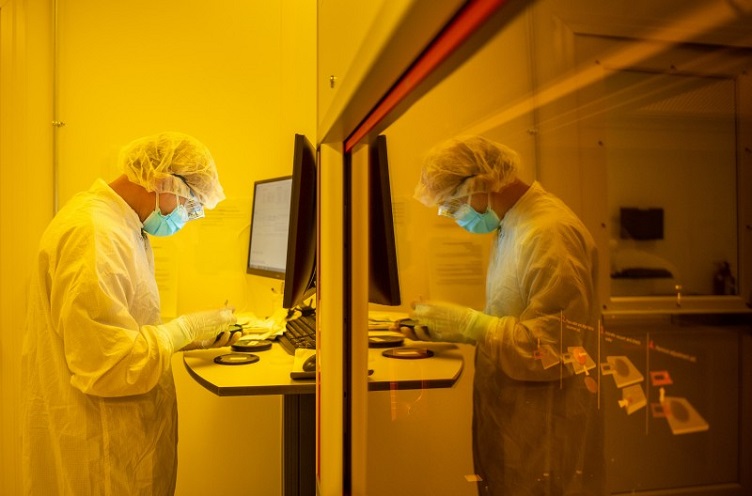
Sandia National Laboratories has become the first national lab to join the U.S. National Semiconductor Technology Center (NSTC), a partnership established by the CHIPS and Science Act to help the U.S. regain its semiconductor manufacturing prowess.
The NSTC was established to accelerate innovation for some of America’s most pressing technology challenges. Additionally, the center is a steppingstone to bringing U.S. domestic semiconductor manufacturing back to the powerhouse it was in the 1990s.
Sandia said in the 1990s, America fabricated about 35% of the world’s semiconductors. Today, it is about 12% with most of the manufacturing taking place in Southeast Asia. Also, the chips made in the U.S. are not the most advanced chips used for smartphones, AI, quantum computers, autonomous vehicles and more.
“We have pioneered the way for other labs to join,” said Mary Monson, Sandia’s senior manager of Technology Partnerships and Business Development. “The CHIPS Act has brought the band back together, you could say. By including the national labs, U.S. companies, and academia, it’s really a force multiplier.”
Why join
Sandia said it hopes to strengthen U.S. semiconductor manufacturing and R&D, help national security production and foster new technologies.
Sandia points to the COVID-19 pandemic as an example of how, due to the aggregation of the semiconductor supply chain being located in Southeast Asia, a semiconductor shortage happened with chips waiting to be built for a variety of sectors such as the automotive industry.
“An average car contains 1,400 chips and electric vehicles use more than 3,000,” said Rick McCormick, Sandia’s senior scientist for semiconductor technology strategy. “Other nations around the globe are investing more than $300 billion to be leaders in semiconductor manufacturing. The U.S. CHIPS Act is our way of ‘keeping up with the Joneses.’ One goal is for the U.S. to have more than 25% of the global capacity for state-of-the-art chips by 2032.”
More than $12 billion in R&D spending is planned under the CHIPS Act including $3 billion to create an ecosystem for packaging assemblies of chiplets. Because of this, Sandia could play a major role in training the workforce for the future as the government invests billions of dollars in new factories requiring an entirely new workforce in the U.S. staffed by STEM students.
“There is a potential crisis looming,” McCormick said. “The Semiconductor Industry Association anticipates that the U.S. will need 60,000 to 70,000 more workers, so we need to help engage the STEM workforce. That effort will also help Sandia bolster its staffing pipeline.”
Sandia said it will offer access to some of its facilities to other NSTC members to help private partners increase their stake in the industry while Sandia can continue its own mission.
