
There is a lot happening in the realm of semiconductor manufacturing as the U.S. begins to push for domestic chipmakers to build their microelectronics in the region rather than use fabs in Asia.
There is also reports now that the Trump Administration will soon be introducing tariffs on semiconductors from other countries — something initially not included in the first few rounds of tariffs. This may have a dramatic impact on consumer electronics including smartphones, PCs, wearables and smart home devices that use chips from Taiwan, South Korea and China.
This has thrown a wrench into many plans including Samsung Electronics Corp., which is reportedly delaying the development of its Taylor, Texas, fab again with production now slated to begin in February 2027.
Samsung said the delay was the result of weakening demand in the market, not related to the subsidy issues after the Trump Administration froze the CHIPS Act funding, which was a bill signed by the Biden Administration to facilitate the construction of new semiconductor fabs domestically.
Nvidia and AMD
As Samsung is delaying, the leading global chipmaker and foundry Taiwan Semiconductor Manufacturing Co. (TSMC) is expanding its relationships quickly in response to the efforts to have chipmakers build their chips domestically in America rather than in Asia.
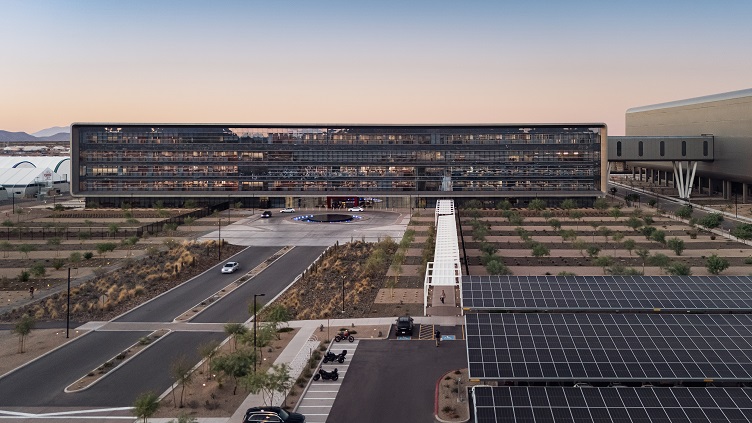
TSMC is fast-tracking its expansion in response to the tariff fallout and is on track to begin construction of its third Arizona fab in June.
TSMC already has commitments from Apple to use the fabs in Arizona to build its chips for iPhones, iPads and Macs. Now, Nvidia and AMD are both eyeing building up infrastructure in support of constructing chips domestically in the U.S.
Nvidia said it will produce as much as $500 billion worth of AI infrastructure in the U.S. over the next four years through manufacturing partnerships, specifically TSMC’s Arizona cluster of chip fabs. Nvidia’s Blackwell AI chip has already started production at the Phoenix, Arizona, fab.
Nvidia said it will also build manufacturing plants in Texas with Taiwan’s Foxconn and Wistron. It is also partnering with Amkor and Siliconware Precision Industries for packaging and testing operations in Arizona.
In response to the tariff turmoil, AMD said some of its microprocessors for data centers will also be made at TSMC’s Phoenix fabs. It will be the first time AMD’s chips will be made in the U.S.
Tariff responses
As the tariff turbulence continues globally, regions are looking to soften the impact of potential disruptions.
South Korea unveiled a $23 billion support package for chips due to the uncertainty in the market. The country said it would increase government support at a time when policy from the U.S. administration and risking competition from Chinese rivals threatens Korea’s semiconductor manufacturing prowess.
The support package is designed to help companies cope with heavier costs globally. A similar support package was introduced by South Korea last week to reduce the blow of U.S. tariffs in the automotive sector.
