
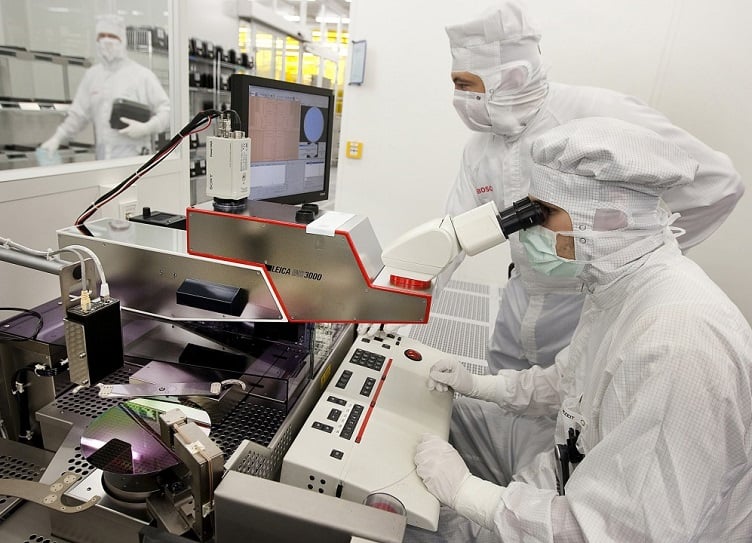
Bosch has opened its automotive chip fab in Dresden, Germany, that will boost capacity for microelectronics used in automated and connected driving.
In March, Bosch announced it would open the fab where it would make power semiconductors for use in DC-DC converters in electric and hybrid vehicles.
“The new wafer fab is the single largest investment in the company’s history,” said Angela Merkel, Federal Chancellor of Germany. “This cannot be stressed too much. Its size and additional production capacity alone are impressive. The very latest methods of data-driven continuous improvement in production make the Dresden plant a smart factory. To put it another way: in this plant, natural and artificial intelligence have joined forces with the internet of things to form a productive symbiosis.”
The move to open the chip fab comes at a time when automotive semiconductors are currently in an ongoing chip shortage because of the COVID-19 pandemic. The automotive sector has been hit especially hard as companies were shy to return to normal production due to the uncertainty involved. When demand returned, the automotive sector was left short of capacity as chip manufacturers moved capacity to other segments of the supply chain.
The result is many automotive OEMs have forecasted billion-dollar losses for the year as well as a reduction in production of vehicles.
The market for semiconductors is expected to grow by 5% over the next decade due in part to their increased inclusion in transportation, manufacturing, clean energy and healthcare.
Production in the Dresden facility is expected to begin in July, about six months earlier than originally planned. For automotive customers, chip production will begin in September, three months earlier than planned.
