
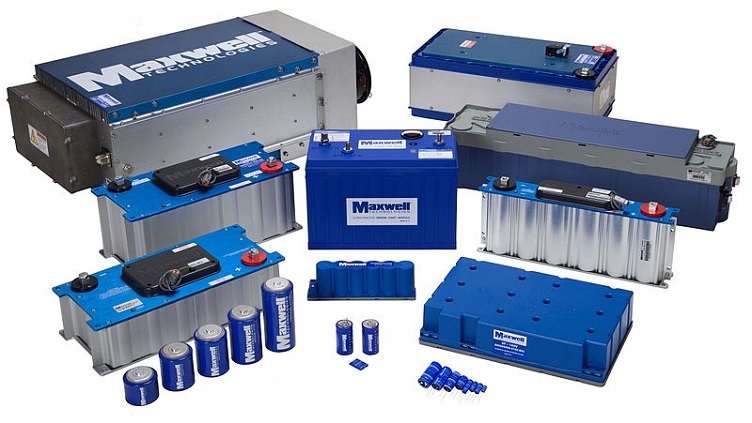
Supercapacitors, also known as ultracapacitors, have drawn considerable attention due to their novel technology and unlimited charge/discharge cycles. Their operational voltage, with the potential for extraordinary energy storage and fast charging in both organic and aqueous electrolytes, is between 1 to 3 V.
The use of an electric double layer at the interface for storing the electric energy between the solid compound and an electrolyte has been known since the 19th century. Supercapacitors have come a long way since, and many useful applications have been demonstrated.
A brief history
The supercapacitor is considered an electrochemical capacitor (EC) because it stores electrical charge in the electric double layer at an interface of a surface-electrolyte. The large surface area joined with a double-layered tight area results in one of the highest capacitance outputs of any device.
In 1957, H.I. Becker of General Electric patented the first electrochemical capacitor device. However, this device was coupled with double-layered charge storage and was not practical due to the necessity of immersing it in an electrolyte pool.
Robert A. Rightmire, a chemist at the Standard Oil Company of Ohio (SOHIO), invented the standard EC design used today. SOHIO was unable to find any use for the application, however, and the design was patented by Nippon Electric Company (NEC), a Japanese company. The first commercially effective EC referred to as a supercapacitor was sold by NEC in 1975.
Soon after the commercialization of NEC’s design, many other agencies tried to design their own ECs. For instance, PSCap, an EC used in diesel locomotive engines as a starter, is manufactured by ECOND. PSCap can be as large as 2 ft in height and 9 in in diameter, having an RC time-constant less than one second, and capacity of voltage up to 200 V with energy up to 45 kJ.
Panasonic's Goldcap EC was developed in 1978 and is unique in its applications. One Goldcap EC was intended to substitute coin-cell batteries. It was quite successful in the solar-powered watch market.
Spiral-wound configuration was the second design and meant for electric vehicles and HEVs. The configuration known as UpCap is rated as 2000 F with a capacity of 2.3 V. It is economical, equipped with low series resistance, the best option for hybrid-vehicle applications, as it dispels the internally generated heat.
Present specs
Many electronic companies, including Maxwell, Tecate Group and Murata, currently make their own ECs. In general, technology is mostly used in the transportation sector and energy solutions. Its current applications cover a wide range, including grid stabilization, automotive sector, utility automobiles, hybrid transportation systems and rail-system power models.
Tecate's’s HC Series ultracapacitors are rated up to 150 F with a capacity of 2.7 V and maximum peak current at 65 A. Murata's DMF Series high-performance supercapacitor (EDLC) exhibits high power, having a capacity of discharge of 50 W/piece. Murata can also level high peak loads and fast charging/discharging cycles for energy-storage systems, energy harvesting and even customer electronics.
The coupling of supercapacitors with fuel cells is considered as one of the best available applications. It is used for fast charging capabilities and augmented energy storage. The fast-charging station of ABB is one of the example that fully charges electric buses in less than 10 minutes. In 2016, the first commercial order for this application was placed.
Future applications
A discussion about supercapacitors cannot be completed without discussing future plans. Standalone supercapacitor batteries are at its final stages. A successful prototype of a supercapacitor battery is created by the researchers at the University of Central Florida. This prototype charges more rapidly, having the capacity of recharging up to 30,000 times, still working like new and takes up a fraction of space compared to that of lithium-ion cells.
Other innovations that tend to modify the capacitor industry incorporate the use of graphene in ECs designing for creating lightweight supercapacitors having an energy storage capacity ranging from 150 F/g to 550 F/g, at a fraction of price as compared to that of current EC designs. This idea is still in the early stages, however.
Realistic applications
The coupling of current energy-storage technologies with a double-layered charging interface is considered the most favorable future of supercapacitors. By the addition of EC technology to fuel-cell applications, successful results have been shown by the companies in the performance of hybrid and electric automobile applications by quickly improving the charge/discharge cycle. The use of charging stations and supercapacitor-based engine starters with the hybrid transport energy systems has also shown an improvement in overall energy storage and charge cycles in many areas.
Future applications of supercapacitors lie in energy storage and rapid charging. Many such applications have already made their way into the market, and are changing the way we think about energy storage.
It may take some time for the standalone supercapacitor battery to be commercially effective. Still, existing supercapacitor applications are an exciting understanding of ancient technology that is getting better all the time.
