
Researchers from UIT the Arctic University of Norway found that artificial intelligence (AI) could be a viable option to create ice warnings that are faster and more accessible on ships.
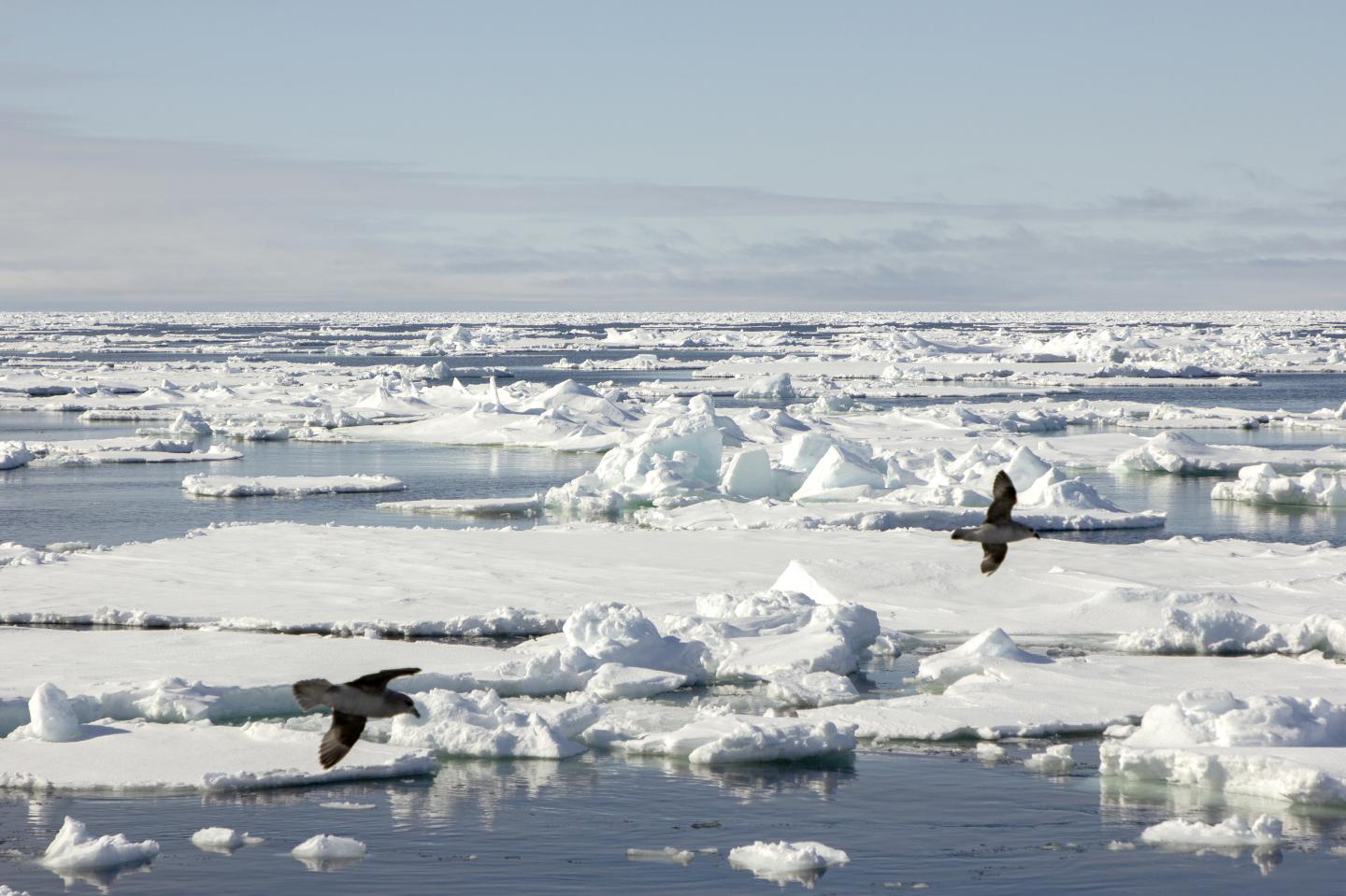 Sea ice in the polar sea. Source: Jørn Berger-Nyvoll, UiT
Currently, supercomputers are used to collect data to determine future developments in sea ice movement, a looming threat for ships, and to create reliable ice warnings. A dynamic computer model is fed satellite observations of ice cover and data on ice thickness and snow depth. However, supercomputers are a limited and costly resource that cannot be used on a ship and it is currently impossible to make ice warnings without a supercomputer. To create a faster and more accessible method, researchers turned to AI.
With AI, calculations could be done right on the ship, without a supercomputer. The team trained a potential AI system for ice prediction by loading it with two weeks of ice data, allowing the system to learn and create its predictions.
An AI algorithm demands less computing power than traditional models, allowing it to be run on a regular laptop on the ship. But the current AI model is not as accurate as traditional models. One challenge it faces is that it relies on historical data whereas physical models are constantly adapted to geophysical changes. Researchers say that with additional research and development, the AI system could be just as accurate as the physical models.
There could be many additional uses for this AI model, such as precise weather reports in the High North and traffic watches for the shipping industry operating close to marginal ice.
