
Sponsored Content
RF & Microwave
Sliver interconnects with data rates greater than 100 Gbps
06 November 2019
Sponsored content
As data transfer speeds increase across a wide range of computing applications, the need for connections that maintain signal integrity is paramount. In addition to the typical increase in frequency needed for upgraded speeds, the development of PAM-4 (four-level pulse-amplitude modulation) means that signal-to-noise (SNR) requirements must be even tighter than before With PAM-4, a single cycle transmits data at one of four voltage levels, instead of the traditional non-return-to-zero (NRZ) methodology with two. Consider also that as speeds progress using these methods — to in excess of 100 gigabits per second (Gbps) — even traditional PCB design techniques can struggle to meet such requirements.
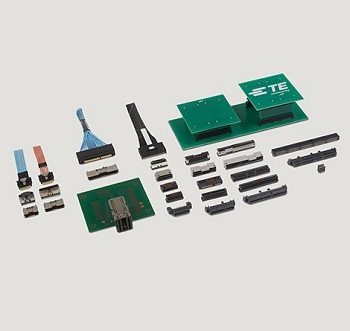 Figure 1: Sliver connectors for SFF-TA-1002. Source: TE ConnectivityAs an answer to both problems, TE Connectivity presents Sliver interconnects for SFF-TA-1002, the second-generation iteration of the Sliver internal connectors and cable assemblies. This cable and connector family is ready speed- and density-wise for the emerging peripheral component interconnect express (PCIe) Gen4 and Gen5, and can function at 56 gigabits (Gbit) Ethernet PAM-4 signaling, with a roadmap to the future 112 Gbit PAM-4. This massive bandwidth potential helps ensure that a system’s connections using Sliver products will not be a design bottleneck into the foreseeable future.
High-integrity connection options
Sliver connectors are available in vertical, right-angle, straddle mount, and orthogonal orientations, and provide industry leading performance. As a specific example, using vertical connectors over a 1 m span and a 33 AWG TwinAx cable assembly, a system will lose around 10 dB of signal insertion loss, and stay below 50 dB of cross-talk until around 15 GHz. When the connector is measured by itself, insertion loss is well under a decibel through 20 GHz. Losses will, of course, vary depending on cable length and data transfer frequency.
 Figure 2: Over a 1 m span and a 33 AWG TwinAx cable assembly, a system will lose around 10 dB of signal insertion loss, and stay below 50 dB of cross-talk until around 15 GHz. Source: TE Connectivity
The Sliver interconnect system can be used in chip-to-chip, board-to-board, chip-to-panel and mezzanine applications. Notably, chip-to-chip connections mean that board designers have another option beyond PCB traces to connect chips on a single board, transferring data in literally another dimension than the normal X/Y orientation. One could consider this to be almost like a data subway, entirely circumventing the “city streets” of a board’s layout in a way that is impossible using traditional traces and vias. Connectors are available for this data shortcut in a variety of plug and receptacle form factors, configurable for the number of data lines needed.
Universal connection solution
With its high data transfer rate capability, Sliver standard cabling for SFF-TA-1002 is excellent for use in all data transfer applications. Since it can be used everywhere, the economy of scale gained means that the cost of using Sliver cabling systems becomes low enough to easily justify implementation — even when comparatively low data rates needed in some parts of a system do not yet call for such performance. This means that system designers using Sliver do not have to think about what cable to use, greatly simplifying design considerations, both now and in the future.
Additionally, Sliver interconnects are suitable for a wide range of industries and use cases. They could, for example, be used in high-performance servers, interfacing with memory, riser cards, storage devices, I/O modules and more, or consumer applications like flat-screen televisions and gaming systems. This really is a ubiquitous interconnect solution giving system designers a go-to option when universal, reliable connections are needed.
The question then becomes whether or not it will gain widespread acceptance in the marketplace. Currently, a multitude of organizations have signed on to the standard, including the Gen-Z Consortium, the Enterprise & Data Center SSD Working Group (EDSFF), the Open Compute Project NIC 3.0 and another to-be-announced standard for advanced memory. Companies represented in these organizations include AMD, Cisco, Dell EMC, Google, HPE, Lenovo, Mellanox, Microsoft and many others. Sliver products set the standard and work with SAS, PCI Express, Ethernet and InfiniBand, and since they are protocol agnostic, the product technology will remain viable even when new communicator methods arise.
Ready to use today and tomorrow
Sliver presents a number of important benefits, including high performance over a wide range of standards and speed needs, design flexibility and low costs due to being able to use it everywhere in a system. Whatever the application — high-end servers, consumer electronics or something entirely new — Sliver interconnects for SFF-TA-1002 stand ready to become an integral part of the design.
For more information on Sliver interconnects, go to TE Connectivity’s website.
Powered by CR4, the Engineering Community
Discussion – 0 comments
By posting a comment you confirm that you have read and accept our Posting Rules and Terms of Use.
Advertisement
Advertisement
Popular News
Find Free Electronics Datasheets

Advertisement