Millions of tons of hazardous ordnance and chemical weapons have blanketed the bottom of the North and Baltic Seas since the end of World War II. Most of these military remnants were intentionally sunk, and a great deal of it was dumped outside of marked munition areas. The rocket-propelled grenades, torpedoes, naval 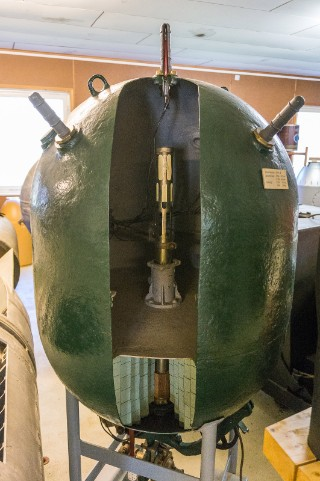 Disassembled moored mine. Source: Fraunhofer ICTbombs and other explosives pose hazards to marine flora and fauna, shipping channels and maritime construction activities.
As recovery of such materials by divers is also hazardous, researchers in Europe plan to send in robots. RoBEMM, a “robotic underwater salvage and disposal process for the disassembly of ammunition in the sea,” is under development by Germany’s Fraunhofer Institute for Chemical Technology ICT, the University of Leipzig and several industrial partners in a project coordinated by explosive ordnance disposal company Heinrich Hirdes EOD Services GmbH.
Fraunhofer researchers devised a method to handle explosives in which every step minimizes the inevitable residual risk of spontaneous explosion. The process includes desensitizing explosives with water and subsequent fragmentation, after which metal cases are rinsed and explosives thermally treated, leaving only scrap metal to be brought ashore.
Tests of the semi-automated robotic salvage and disposal system, intended to replace dangerous diver deployments and minimize the often unavoidable detonation of ordnance, will begin soon.
