
The emerging technology of 4D printing involves the integration of 3D printing and active materials technologies to realize printed components that can be switched between multiple configurations on exposure to heat, moisture or other environmental stimuli. Challenges remain as the process often requires complex and time-consuming post-processing steps to mechanically program each component. In addition, many commercial printers can only print 4D structures composed of a single material.
Practical applications for 4D printing could soon be expanded with a new system devised by researchers from 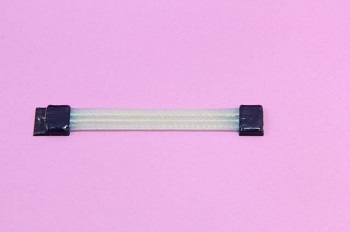 A new 4D printing technique could one day allow manufacturers to produce electronic devices and their wiring in a single process. Source: H. Jerry QiGeorgia Institute of Technology and Singapore University of Technology and Design. A composite composed of an acrylic and an epoxy was used with a commercial printer and a heat source to create 4D objects, such as a flower that can close its petals or a star that morphs into a dome. These objects transformed shape up to 90 percent faster than previously possible because the tedious mechanical programming steps were incorporated directly into the 3D printing process.
An all-in-one printer engineered on the basis of this work combines four different printing techniques, including aerosol, inkjet, direct ink write and fused deposition modeling. The system can accept different stiff and elastic materials including hydrogels, silver nanoparticle-based conductive inks, liquid crystal elastomers and shape memory polymers (SMPs). The researchers can print higher-quality SMPs capable of making more intricate shape changes than in the past because the material can be programmed to “remember” a shape and then transform into it when heated.
The printer can also be used to project a range of white, gray or black shades of light to form and cure a component into a solid. This grayscale lighting triggers a crosslinking reaction that can alter the component’s behavior, depending on the grayscale or shade shined on it. A brighter light shade creates a part that is harder, while a darker shade forms a softer part, enabling production of components that can bend or stretch differently than other parts of the 4D structure.
Electrical wiring can be printed directly onto an antenna, a sensor or other electrical device. The process relies on a direct-ink-write method to produce a line of silver nanoparticle ink. A photonic cure unit dries and coalesces the nanoparticles to form conductive wire, after which the ink-jet component creates the plastic coating that encases the wire.
The researchers are collaborating with Children’s Healthcare of Atlanta to determine whether this new technology could print prosthetic hands for children born with malformed arms.
The research was presented at the 255th National Meeting & Exposition of the American Chemical Society in New Orleans, March 18-22.
