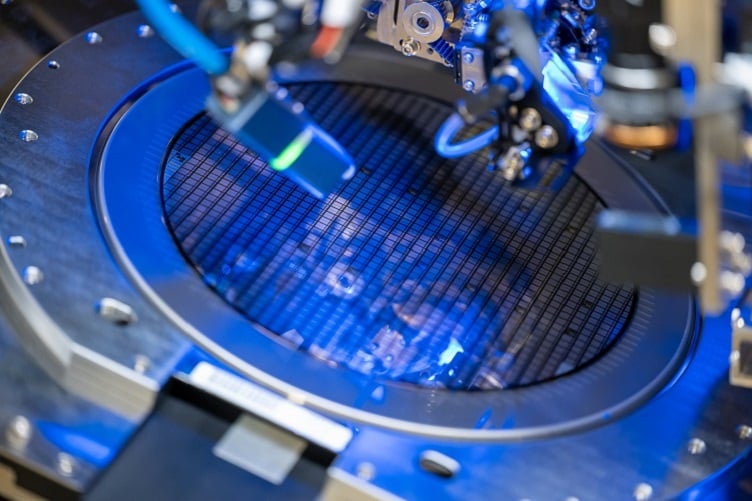
The market for silicon carbide (SiC) has been on a turbulent ride in the past few years.
With major bankruptcies, increased competition and overbuilt capacity striking the market simultaneously, the SiC market has suffered from a painful but potentially temporary correction.
But that hasn’t stopped vendors from investing in the technology due to the strong fundamentals of where these semiconductors are relevant — electric vehicles (EVs), renewable energy, AI data centers and industrial power electronics.
That includes Bosch, which today introduced its third generation SiC chips that the company claims have a 20% higher performance for more efficiency in electronics.
“Our ambition is clear: we want to be a globally leading manufacturer of SiC chips,” said Markus Heyn, member of the Bosch board of management and chairman of the Bosch Mobility business sector.
That ambition might be possible given the previous leader in the market, Wolfspeed, declared bankruptcy in June of 2025 citing factors like:
- Slowing EV growth
- Aggressive pricing from Chinese vendors
- Overexpansion
Over their skis
Wolfspeed, as well as other vendors, may have gone too far over their skis in expanding into the SiC sector before the market conditions were ready. While SiC is still in the nascent stages, the inevitable growth from EVs and renewable energy infrastructure are likely to lead the way. The rapid expansion of AI data centers will also likely play a major role in getting SiC back on track to a successful path.
According to market research firm Yole Intelligence, the global SiC power semiconductor market is slated to grow to about $9.2 billion by 2029, up from $2.3 billion in 2023.
Bosch is positioning itself for high growth in the market by not just upping the performance but by reducing the size of the SiC chips compared to previous generations.
“This miniaturization is the key to greater cost efficiency, as we can produce many more chips per wafer,” Heyn said. “That means we’re playing a key role in making high-performance electronics more widely available.”
Bosch said it has delivered more than 60 million SiC chips worldwide since the first generation went into production in 2021.
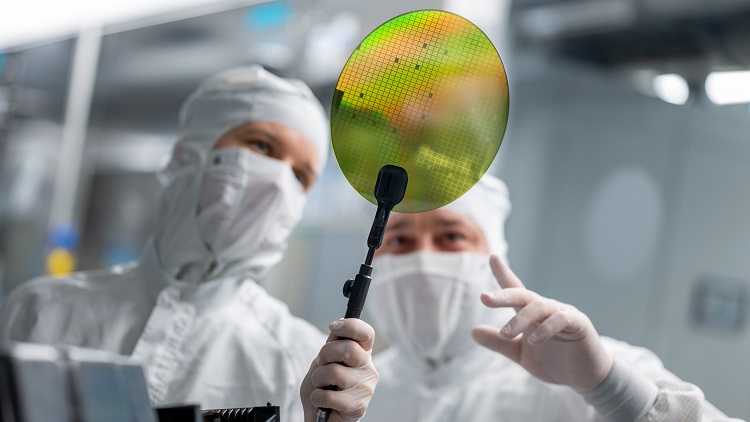 Bosch engineers examine a SiC wafer. Bosch launched its third generation SiC wafers to position itself for leadership in the sector that has been chaotic in the last few years. Source: Bosch
Vendor expansion
Despite the major turmoil in the SiC market, vendors are looking to fill the power vacuum left by Wolfspeed. This includes ST Microelectronics, Infineon, Rohm, Bosch and many others. They will have to position themselves to challenge the localization strategy of Chinese vendors that will likely see continued growth in the short term due to price cuts on SiC and other wide bandgap technologies, according to the market research firm TrendForce.
However, these large semiconductor vendors have advantages over their Chinese counterparts beyond just pricing.
“Pricing pressure is likely to persist over the next one to three years, but it should not be viewed as a long-term structural issue,” said Rany Gong, analyst at TrendForce to Electronics360. “The compound semiconductor industry is fundamentally technology- and capital-intensive. Ultimately, competitive positioning will be determined by scale, yield, reliability, and system-level solution capability — rather than pricing alone.”
Bosch manufacturing expansion
Bosch said it is expanding its development work for SiC chips while increasing manufacturing and clean-room capacity as part of its 3 billion euro investment in funding programs for microelectronics and communication technology.
Bosch’s third generation SiC chips will be manufactured on 200 mm wafers at its Reutlingen, Germany facility. The company also acquired a second fab for SiC chip manufacturing in Roseville, California, and is expanding the equipment in the facility with an additional 1.9 billion euros to manufacture and deliver third generation SiC chips in late 2026.
“In the future, Bosch will supply its innovative SiC chips from these two fabs in Germany and the U.S.,” Heyn said.
Bosch said it is taking this two-pronged manufacturing approach due to the expansion of electrification in the automotive market in both Europe and North America.
