
Harsh chemicals, high heat and complex processing formats are currently required to recycle batteries. A great proportion of the electronic waste formed by end-of-life batteries ends up in landfills, prompting researchers to seek simpler routes for their recovery and reuse.
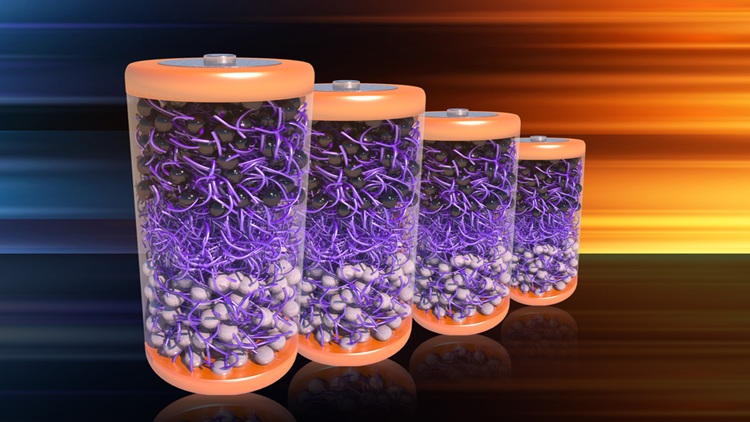
To streamline the recycling process, emphasis was placed on the development of a sustainable electrolyte as those included in current lithium-ion batteries degrade over time into toxic byproducts that require specialized handling. The researchers combined aramid amphiphiles (AA), a type of molecule that self-assembles in water, with polyethylene glycol (PEG), which can conduct lithium ions. When exposed to water, the AA molecules spontaneously form nanoribbons with ion-conducting PEG surfaces, forming a mechanically stable structure that can be hot-pressed into a solid-state material.
Subsequent testing described in Nature Chemistry confirmed the material could withstand stresses associated with making and running a battery. After constructing a solid-state battery cell that used lithium iron phosphate for the cathode and lithium titanium oxide as the anode, the nanoribbons were observed to move lithium ions successfully between the electrodes. Immersing the cell into organic solvents resulted in immediate dissolution of the material, with each part of the battery falling away for easier recycling.
Future efforts will focus on opportunities to integrate these materials into existing battery designs and to advance new battery chemistries.
Researchers from Stanford University, MIT, Université Paris-Saclay (France), U.S. Argonne National Laboratory, University of California Irvine and University of California San Diego contributed to this development.
