
Machine vision has traditionally been a technology used in manufacturing and quality control, automation, agriculture, logistics and security.
In these industries, an expansive (and expensive) camera is used to detect faults in products, predict maintenance and monitor large spaces for motion and unusual behavior among other applications.
However, with advanced AI, deep learning and cheaper devices, machine vision is working its way into new use cases that everyday users will likely begin to see now or in the near future.
Retail
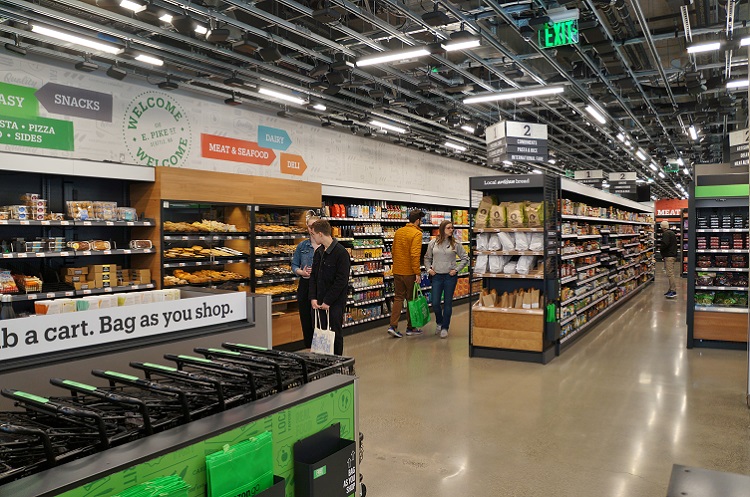
Amazon was one of the first companies to experiment with a walk-in/walk-out system that uses technology to track consumers that enter the store and then automatically bill them when they leave with goods.
These types of stores are expanding. Go into a local supermarket and self-checkout now has a camera watching every product that is moved from one area to the next. Skip an item, the system sees it and asks the consumer to scan the item.
But this is only the beginning. Likely augmented reality will be coming to retail stores that will allow users to have “virtual try-ons” where a machine vision system allows consumers to see how clothes, shoes or even makeup appear without having to physically see it on their bodies.
For retailers, machine vision will be used to see how consumers act inside a store, how long they stay in a store or how much time they spend looking at items. This will allow them to customize their stores to highlight popular items based on the findings.
Smart home
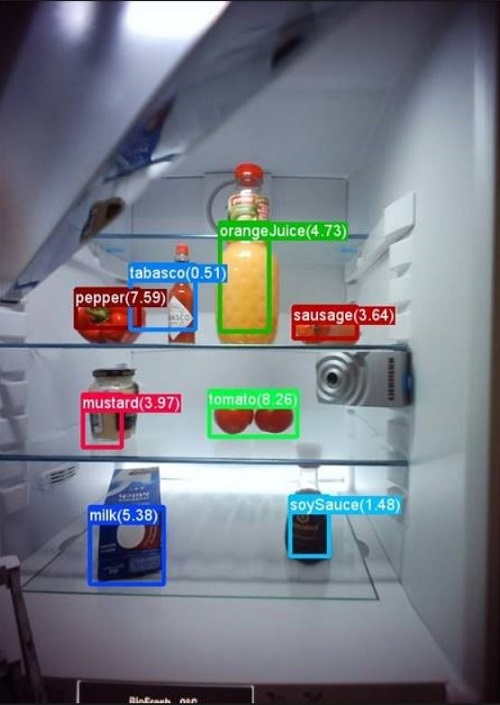 Years ago, Microsoft developed a machine vision technology for refrigerators to determine the health of the food inside and identify to consumers when products needed replacement. Fast forward to today and machine vision in the smart home is expanding to smart cameras and many more applications for security. Source: Microsoft New cheap machine vision cameras, such as Hup AI’s recent $99 camera, are allowing for new iterations inside smart homes. These AI-enabled cameras are being used to help with privacy concerns when it comes to occupancy detection for seniors.
If someone falls or is in distressed, the cameras can detect these changes in the home and even potentially alert first responders without violating any privacy issues.
But it could also be used for other types of detection. In the case of Hup AI’s camera, it doesn't just watch the home as a security camera, it can be a helpful spotter of changes in the home such as when messes appear in areas that are normally clean. Or it can be trained to watch for events in the home and then alert the homeowners.
Machine vision is also being used in the smart home for facial recognition to identify visitors or deliveries to provide an even greater level of security.
Autonomous machines
Machine vision will be a key technology to enable the coming of multiple ranges of autonomous machines. This includes self-driving cars, delivery robots, drones and even retail robots.
Advanced driving assistance systems (ADAS) are already in most new vehicles coming off the assembly line. While many of these vehicles use cameras and sensors for ADAS, machine vision will allow for even more features to be enabled like traffic sign recognition, pedestrian detection, lane assistance and a better understanding of a vehicle’s surroundings so that drivers can react in real time.
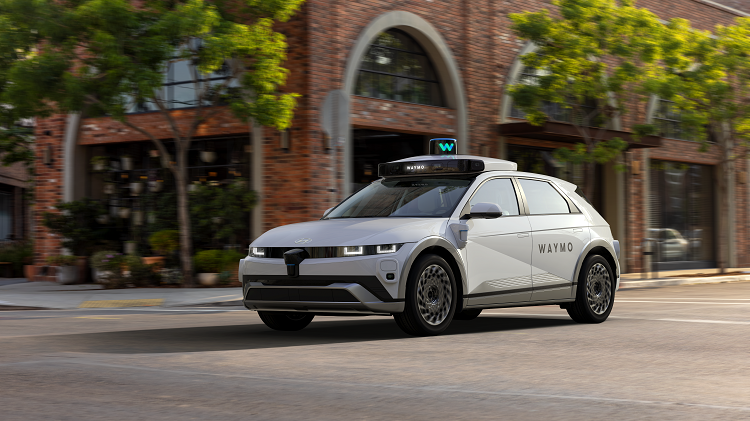 Waymo is testing autonomous vehicles and machine vision will play a significant role in how these vehicles identify the world around it and react. Source: Waymo
These features will be critical for the advent of autonomous vehicles that are already being tested in major cities by Waymo, Tesla and many more.
In autonomous delivery robots and drones, machine vision will allow these last-mile delivery vehicles to:
- Avoid obstacles
- Navigate complex environments
- Ensure accuracy
- Deliver longer distances
Human augmentation
While this seems to be the biggest outlier, machine vision is already being experimented with in wearable devices to enhance vision in people that have impairments. Machine vision is also being considered for smart glasses that can be used for object detection, facial recognition or helping the blind interact with the world around them.
Machine vision could also be used for sign language translation for those hard of hearing or deaf. Machine vision systems could analyze hand movements and translate sign language into text or speech in real-time. This would allow those with impairments to broaden their communication ability with others, particularly when ordering food or purchasing goods.
Conclusion
This is only the beginning. These four segments are likely to come soon but more real-world applications are likely to be developed as machine vision technology gets smaller, cheaper and more advanced.
With companies already looking to reduce the cost and barriers to machine vision, the future will, not doubt, be filled with technology that reacts to the world around us.
