
Collaborative robots are automation systems that are intended to operate cooperatively with humans, rather than in isolated, automation-only spaces. That is the environment most common to traditional robotic arms, gantries and other equipment, which required personnel barriers, mostly to protect them against themselves.
Not only were the robots expensive, but the additional hardware, programming and training often doubled or tripled the capital expense. This put robotic technologies out of the reach of many small and midsize businesses (SMBs), who were wary about the investment, or who simply couldn’t afford them.
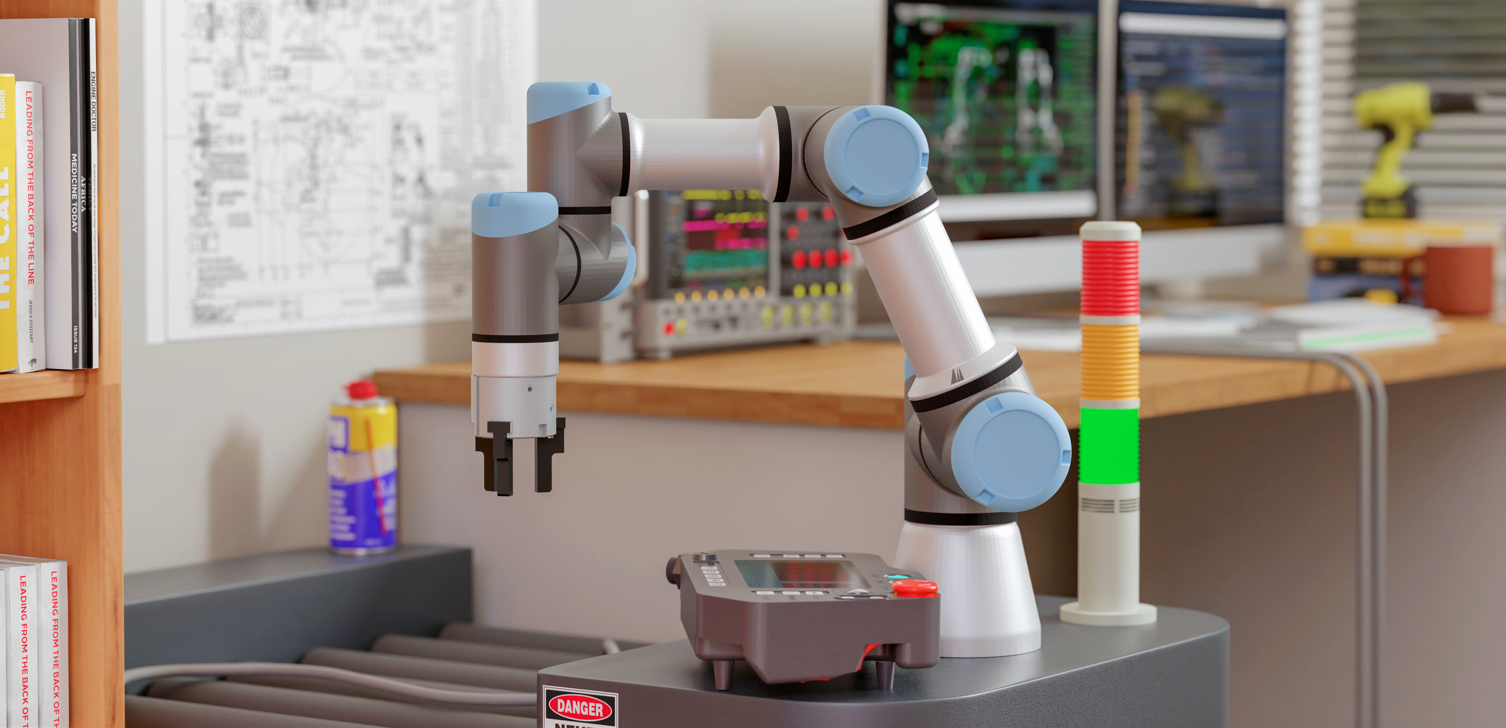 Cobots range from humanized android devices to relatively simple and low cost tools. It’s critical to assess the value proposition and capability needs, as well as the human and environment fit in specifying solutions. Source: Nay/Adobe Stock
Quickly, they are transforming automation for SMBs as well, by enabling flexible, cost-effective and easy-to-deploy solutions that improve productivity without the need for a drastic change or disruption in operations.
Unlike standalone industrial robots that require significant infrastructure and human-exclusion space/safety barriers, cobots work alongside human employees, making them ideal for businesses with limited space and budget who nonetheless need to automate. However, understanding if cobots are correct for a particular application requires scrutiny of several key factors. Here are eight to evaluate when considering integrating cobots into your operations.
1. Application suitability, task complexity
The first step in specifying a cobot implementation is understanding the specifics of the applications it is being tasked with. Cobots are well-suited for repetitive, moderately precise and physically demanding tasks that may otherwise strain human workers. Common applications include pick-and-place operations, machine tending, packaging, quality inspection and suitable assembly tasks. They are less well suited to minute precision and unpredictable tasks that require dynamically adaptive processing.
For SMBs, it's essential to assess whether the cobot can handle the complexity or forces of the task. If the process involves intricate manipulations, heavy loads or extreme precision, it will be necessary to select cobots with advanced vision systems, force control capabilities or specialized grippers, which can considerably increase the investment costs. Evaluating the technical requirements of an application will ensure that the selected cobot can perform efficiently without high-cost modifications or additional features/software.
2. Ease of deployment and programming
One of the most profound benefits offered by cobots over traditional, fixed and dedicated robots is their relative ease of use. Many cobots are designed for quick setup, allowing quick integration into operations without extensive in-house programming expertise. This typically includes intuitive programming interfaces, such as drag-and-drop graphical user interfaces, teach-by-demonstration capabilities where cobots can be physically led through operational training, or no-code programming platforms.
For SMBs with limited (or zero) automation experience, ease of deployment is decisive in minimizing up-front learning and downtime to deliver a smooth transition to operational status. The less technical expertise required for setup and reconfiguration, the faster an organization can begin to realize the benefits of automation.
3. CAPEX and return on investment (ROI)
Budget constraints always drive automation decisions for small and medium-sized businesses. While cobots are generally more affordable than traditional industrial robots, costs can vary significantly depending on the model, advanced vision systems, customer grippers, payload capacity and additional accessories such as sensors or tool adaptations.
Specifiers must consider the total cost of ownership, including maintenance, training and integration expenses. The goal is to select operational assistants that deliver a strong ROI by reducing labor costs, improving productivity and reducing error risk. Projecting the expected payback period — how long it will take for the cobot to generate cost savings that cover its purchase and implementation — is the essential metric for decision-making.
4. Safety features and workplace integration
Cobots are variously designed with built-in safety features that enable them to operate alongside human workers in low-order environments with unpredictable influences to navigate/manage. These include ultrasonic, force and torque sensors that detect unexpected contact, vision analysis of surroundings in real time, emergency stop functions and speed-limiting mechanisms to prevent injuries. A key aspect is voice input and the quick learning of command and warning associated sounds.
However, safety considerations go beyond just the cobot itself. The work environment plays a crucial role in determining whether additional safeguards, such as light curtains or safety scanners, are necessary. Specifiers must conduct a risk assessment to evaluate potential hazards and ensure that the cobot can operate safely in its intended workspace. If a facility is compact or requires frequent human-robot interaction, selecting a cobot with enhanced safety features is particularly important.
Traditional automation is never used to automate the chaos of an existing application — order is imposed first. Cobots require some of this, to ensure easy adoption.
5. Payload capacity and reach
Cobots come in various sizes with different payload and reach capabilities. When selecting a cobot, it's essential to match these specifications to application requirements.
Payload capacity refers to the maximum weight the cobot can handle in various modes and in balance situations. If an application involves handling small components, a lightweight cobot with a low payload may be sufficient. For heavier tasks, such as machine loading or palletizing, users will need a cobot with a higher payload capacity. It is critical to not load to the capacity limit in normal operations, to allow adaptive responses some extra power at need.
Reach determines how far the cobot's effectors can extend. If a workspace requires the cobot to operate within a confined area or reach across multiple workstations, choosing a model with the appropriate operational range capacity will be critical — but care is required to ensure load capacity and balance limitations are not exceeded in the worst case.
6. Scalability and flexibility
Business needs can change rapidly due to growth, shifting customer demands, or evolving production requirements. Investing in a cobot that offers flexibility and scalability ensures that automation remains a valuable long-term asset.
Cobots with modular designs, interchangeable end-effectors and easy reprogramming capabilities allow rapid adaptation to new tasks without major reinvestment. Some cobots can be mounted on self-propelled platforms, other more advanced devices have this capability built in. This enables them to be easily relocated within a facility as needs change. If a use-case requires versatility, selecting a cobot with adaptable features and self-adaptive capabilities will maximize its usefulness across multiple workflows.
7. Integration with existing systems
A cobot should seamlessly integrate with the existing production environment it is introduced to, including machinery, conveyor systems and software platforms. Compatibility with standard industrial protocols such as Modbus, EtherCAT or OPC UA helps smooth communication with other equipment. Simplifying the environment to make it more regulated and robot-adapted can greatly ease this aspect.
Manufacturing execution systems (MES) or enterprise resource planning (ERP) software allows cobots with cloud connectivity and IoT capabilities to provide real-time data insights for process optimization, feeding an operation's big-data capabilities. Checking for integration support with existing infrastructure will prevent compatibility issues and enhance overall automation efficiency.
8. Technical support and vendor reliability
New to automation must include access to reliable technical support. Selecting a cobot from a reputable manufacturer with strong customer service, training resources and after-sales support can make a difference in the success of implementation and ongoing operations.
Consider the following when evaluating vendors:
● Availability of online tutorials, training programs and documentation
● Warranty and maintenance options
● Access to local service technicians or remote support
● A track record of reliability and customer satisfaction
Choosing a vendor with a strong support network ensures that any technical challenges can be addressed quickly, minimizing disruptions to operations.
Conclusion
Cobots offer small and medium-sized businesses an accessible and cost-effective path to rapid, partial automation, enabling increased efficiency, improving workplace safety and maintaining/enhancing competitiveness. However, selecting the right cobot requires careful consideration of task suitability, cost, safety, integration, reconfiguration challenges and scalability. By evaluating these eight key aspects, potential users can make better informed decisions that align with their operational goals and maximize the benefits of collaborative automation.
