
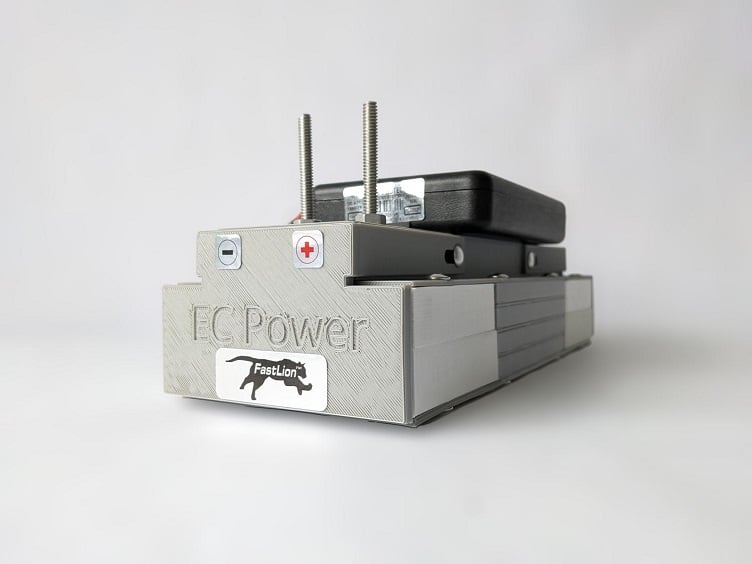
Penn State University has developed an electric vehicle (EV) battery design that allows for a 10 minute charge time. A breakthrough that could pave the way for the rapid adoption of EVs.
The technology allows for a shorter charge time and more energy acquired for a longer travel range.
The adoption of EVs is rising due to an automotive transition to electrification being undertaken by every major automotive OEM. Many of these vehicle makers have pledged to phase out gasoline- and diesel-powered engines over the course of the next 15 years. If they won’t completely phase these engines out, they will be selling a majority of electrified models by 2040.
Additionally, governments are undertaking changes as well to promote the move to EVs as part of the move to fight climate change. In August, California passed a plan to restrict and then ultimately ban the sale of gasoline-powered cars in the state. By 2035, these engines will be outlawed on new vehicles.
“The need for smaller, faster-charging batteries is greater than ever,” said Chao-Yang Wang, the William E. Diefenderfer Professor of Mechanical Engineering at Penn State. “There are simply not enough batteries and critical raw materials, especially those produced domestically, to meet anticipated demand.”
Wang said that current batteries inside EVs face two drawbacks: slow recharge and large size. Instead of taking a few minutes at the gas pump, recharging an EV could take hours in some cases.
“Our fast-charging technology works for most energy-dense batteries and will open a new possibility to downsize electric vehicle batteries from 150 to 50 kWh without causing drivers to feel range anxiety,” Wang said. “The smaller, faster-charging batteries will dramatically cut down battery cost and usage of critical raw materials such as cobalt, graphite and lithium, enabling mass adoption of affordable electric cars.”
How it works
The battery technology uses internal thermal modulation — a method of temperature control to get the best possible performance out of the battery. Batteries operate best when they are hot but not too hot so it is a balance of getting the right temperature in the batteries, which has been a challenge for engineers, Wang said.
Penn State researchers decided to regulate the temperature from inside the battery with the internal structure adding an ultrathin nickel foil as a fourth component besides the anode, electrolyte and cathode. The nickel foil self-regulates the battery’s temperature and reactivity, allowing for the 10 minute fast charging on just about any EV battery.
The long-term goal is to manufacture and commercialize the fast-charging battery for future EV batteries and the university is working with EC Power to make this possible.
The full research can be found in the journal Nature.
