
Sponsored Content
Power
Powerful cameras and drones vastly simplify power line inspections
17 June 2019
Electrical components in high-voltage electrical power lines will often exhibit a bluish glow in the air surrounding them (Figure 1). This glow, known as a corona discharge, occurs when the strength of the electrical field is high enough to ionize air around the conducting elements.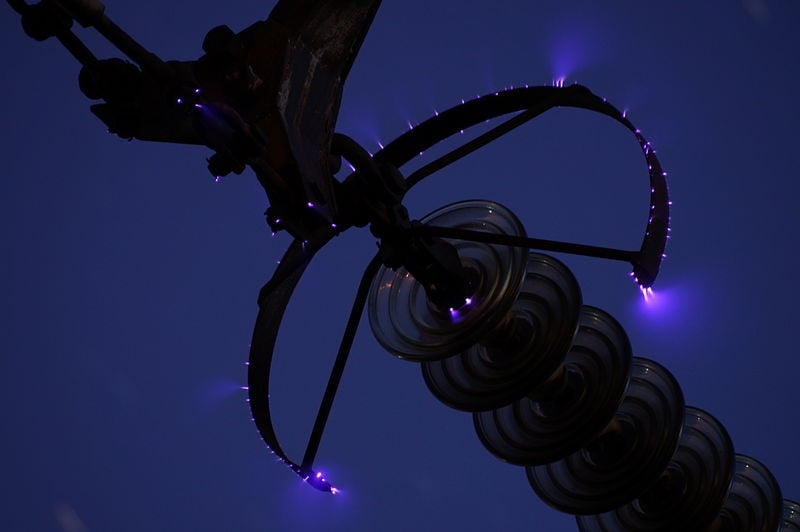 Figure 1. Corona discharge in power line. Source: Nitromethane/CC BY-SA 3.0
Corona discharge in high-voltage electrical power lines is not desirable for several reasons. It often indicates a waste of energy, and it can produce audible noise, such as buzzing, cracking or humming. Corona discharge can cause unwanted electromagnetic energy that may interfere with nearby electronic components. It may also generate gases such as ozone and nitric oxide, that when combined with water vapor, can corrode, degrade and embrittle power line-system components, such as insulators, conductors and cladding. Electrical power companies must therefore perform regular inspections of their power lines to identify areas and components with excessive corona discharge and potential damage.
Various methods may be employed to detect corona discharge and potential damage on power line equipment, some of which are non-destructive and non-intrusive. These methods include visual inspection at night for the bluish discharge which is unsafe and costly; audible inspections with antennas to detect hissing, buzzing or cracking sounds, but cannot pinpoint the actual discharge location; and daytime visual inspection with specialized sophisticated cameras that pinpoint, show and record the discharges.
While it is not possible for the human eye to see corona discharge during the day, these sophisticated cameras involve the use of a pair of cameras: a regular HD camera and a ultraviolet (UV) camera whose output are overlaid and merged. Here, an inspector can get within visual range of power lines, point the camera and see a visual image of the corona discharge. Such systems are fast and effective at detecting corona discharge events, recording and documenting them for analysis and archival retention. However, since such cameras should have a clear line of sight inspectors need to be in visual contact with the equipment is monitored. Therefore, to inspect installations with physical barriers, like those that are hard to get to or are in dangerous locations, it is optimal to inspect that equipment from the air.
Ofil Systems Ltd. has further advanced the field of UV detection for corona discharge on power line systems by offering its micROM HD camera, which is specifically designed for integration onto small unmanned aerial systems (SUASs), or drones. The micROM HD (Figure 2) is the first high-definition mini corona camera system with dual sensors: solar blind UV and visible light. It is capable of simplifying corona detection, helps identify rapidly potential electrical faults, provide real results in real-time and lead engineers directly to the source. These advantages are attributed to Ofil’s unique proprietary achievements that ensure high sensitivity to UV radiation, HD imaging and accurate merging of the sensors’ output. While these features are shared by all of Ofil’s products, the challenge in designing a camera for SUASs has further aspects of reducing sizes and ensuring easy integration with drones.
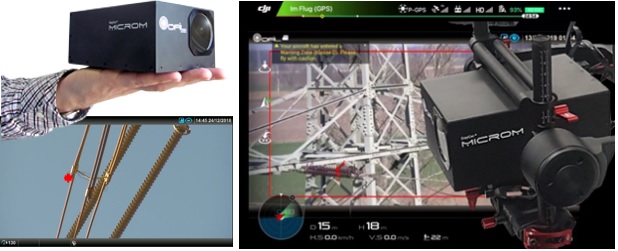 Figure 2. At right, the micROM HD camera. At left top, the micROM held demonstrating its small dimension, at bottom, UV corona discharge image is superimposed onto a visual image. Source: Ofil
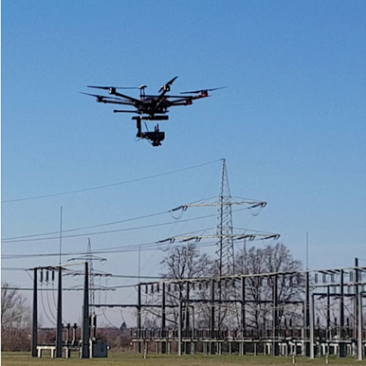 Figure 3. The micROMHD on a drone. Source: OfilThe micROM HD camera can record both UV radiation and the radiating sources in real-time, providing an efficient means to pinpoint faults at corona discharge sites. Interfaces to GPS, temperature and humidity sensors enable the user to embed specific data into the recordings to aid in future identification and analysis tasks. Together, the micROM HD and drone significantly enhance the efficacy, efficiency and safety of power line inspection while drastically reducing inspection time, replacing the need for bucket trucks and occasionally also helicopters.
Founded in 1993, Ofil Systems Ltd. is a company that develops innovative and proprietary UV detection systems, ranging from compact handheld devices to high-end, aerial, gimballed payloads, for power grid maintenance engineers and inspectors, and oil spill detection. Ofil is an innovative leader whose products are being used worldwide, with products and systems sold and used in more than 50 countries throughout North America, Europe, Asia, Oceania and the Middle East.
For more information, visit the Ofil website.
Powered by CR4, the Engineering Community
Discussion – 1 comment
By posting a comment you confirm that you have read and accept our Posting Rules and Terms of Use.
#1
JaneN
2019-Sep-22 3:23 AM
Very interesting! What's the ideal IoT low power consumption for this camera?
Advertisement
Advertisement
Popular News
Find Free Electronics Datasheets

Advertisement