
Sponsored Content
Electronics and Semiconductors
The quiet company supporting big-name mmWave innovators
01 May 2019
Sponsored content
Radar technology has come a long way since its inception.
For a time, German U-boats dominated the seas during World War II. The submarines remained submerged during daylight to hide, then surfaced to torpedo Allied targets under cover of darkness. The U-boats were responsible for destroying thousands of Allied ships. To combat the U-boats, Allied nations had to develop compelling technology to detect and target the U-boats. Radar technology answered that need.
The initial X-band images — obtained from cumbersome analog hardware and vacuum tube technology — were coarse and grainy, but neutralized the U-boat threat. Over time, engineers have moved up the electromagnetic spectrum and refined the hardware and the transmission quality. While amazing R&D breakthroughs still happen in the microwave frequencies, such as quantum computing development and radio astronomy, consumer demand for millimeter wave (mmW) bandwidth has sparked significant interest in a formerly esoteric and seemingly irrelevant frequency.
Today, this early radar and radio technology can be viewed as the foundation of all things wireless. More specifically, with the advances in cell phone communications and automobile radars, the mmW frequency will become the ubiquitous “band in your hand.”
High-volume applications
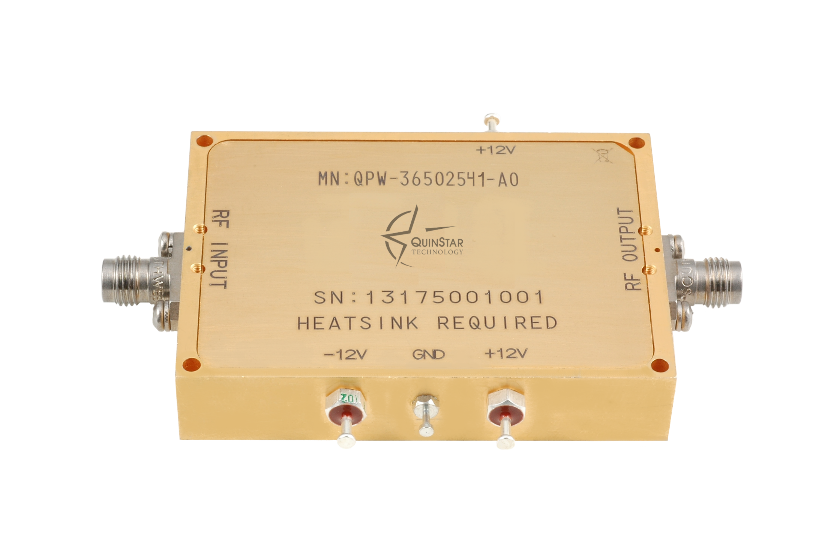 Figure 1. Millimeter-wave broadband power amplifiers enable 5G developers to conduct prototype and modeling studies. Source: QuinStarIn 2019, the cellular wireless communication industry is undergoing a tremendous change, as the first networks and smartphones for 5G are being rolled out. These initial deployments of 5G will utilize lower bandwidth networks, but future deployments will allow for 5G over mmW, enabling applications — even ones yet to be created — to garner super-fast speed and reliability.
Simultaneously, the automotive industry is undergoing its own massive transformation in the form of connected and self-driving cars. The need for bandwidth for these self-driving cars will be immense, as they will need to communicate with infrastructure and networks, as well as the automated cars around them. Plus, as more infotainment options become available, higher levels of bandwidth in vehicles will be required to meet streaming, gaming and other automotive features. Consequently, mmW technology will be instrumental to providing the data to accomplish these tasks and more.
The silent partner
No doubt, the demand for mmW technology is rising as a result of new technologies, but only a limited number of engineers have experience at this frequency range. The good news is there is a partner that has been in the business of developing mmW components and multi-functional modules for more than 25 years.
QuinStar Technology does not make the headlines that big-name companies do, but rather works behind the scenes as a supporter to these innovators by providing proof-of-concept and testing stages for mmW products. The mmW frequency range is just now gaining widespread attention due to the focus in the telecommunications industry on 5G and the automotive industry on self-driving cars. Yet, QuinStar has been focused on mmW technology since its inception.
QuinStar provides developers with the rapid prototyping they require to validate system designs, such as application-specific monolithic microwave integrated circuits (MMICs), mmW space-qualified and robust solid-state power amplifiers (SSPAs) and transceiver modules that enable the development of complex systems such as advanced weather radar — today and into the future.
QuinStar built a name for itself by supplying the aerospace industry with mmW products used by NASA and other space and defense agencies. Because of this aerospace heritage, the company is well positioned to provide trailblazing engineers with the tools to develop next-generation, commercial mmW systems.
The hands-on partner
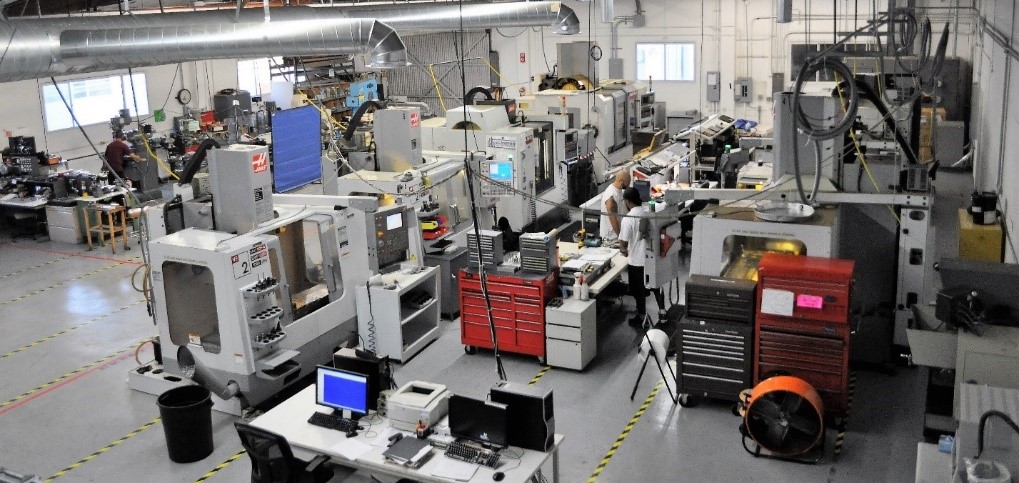 Figure 2. From CNC and EDM machining to hand de-burred finished products, QuinStar’s 5,000 square-feet precision machine shop supports rapid prototyping. Source: QuinStar
Not only does QuinStar have the finesse to make the integrated circuits used in applications for mmW and microwave wireless frequencies, it is hands-on with sophisticated electric discharge machines and four-axis CNCs, as well as with conventional machining processes.
QuinStar designs and manufactures the special hardware required to get signals in and out of semiconductors to obtain performance data from these chips. From probing a new wafer lot to hand de-burring a freshly machined housing, QuinStar has the personnel and equipment to support the needs of today’s technology headliners.
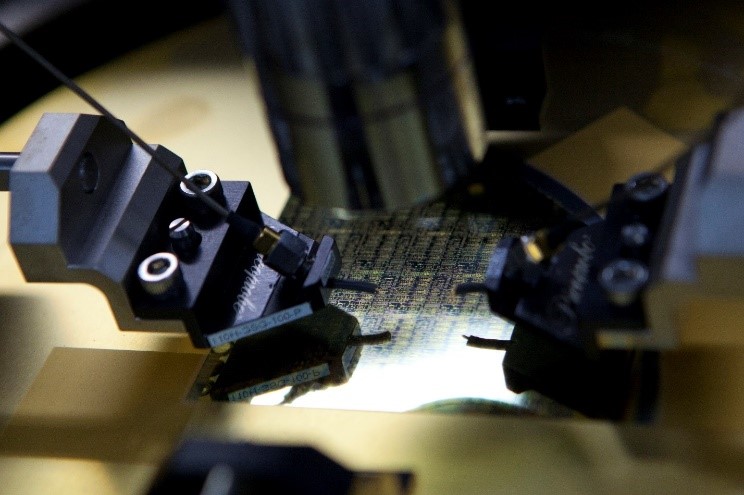 Figure 3. Chips are designed and sent to a foundry. Once obtained from the foundry, QuinStar probes each wafer to measure performance before dicing into chips for MMIC production. Source: QuinStarTo achieve the level of prototyping and production required, being able to change directions quickly as well as to fabricate and modify parts is paramount. The best way to do this is to have vertically integrated capabilities to support the design engineers with simulation, fabrication and analysis capacities. For example, high-power, gallium nitride-based SSPAs require the synchronous optimization of several different technologies: high-power ferrite devices, low-loss custom waveguide fabrication, power combiners, power supply conditioning circuits and MMICs. Developing a unique product that relies on emerging technology requires keeping these essential processes in-house. This allows the company to be fast and flexible with design improvements.
Not only can QuinStar contribute semiconductor design and packaging, QuinStar designs and manufactures the supporting components and connections to complete the hardware system. The waveguides and related products that QuinStar manufactures cover the frequency range of 18 to 220 GHz in 10 frequency bands. The product line includes straight sections, bends, twists and custom work. Furthermore, QuinStar makes adapters, terminations, couplers, dividers and filters as well as other related products.
Microwave advancements
name="_Hlk6308863">Meanwhile, as consumer and commercial interest in hot technologies is getting most of the headlines, advances in microwave frequencies continue to be an important contributor in R&D applications.
QuinStar works in these frequencies as well, producing the components and modules that go into radar and radio systems used in applications such as scanning tunneling microscopy, quantum computing, particle physics research and radio astronomy.
Just recently, a group of telescopes took the first direct image of a supermassive black hole at the heart of Messier 87, a galaxy within the Virgo galaxy cluster that is 55 million light years from Earth. One of those telescopes was Alma, which integrated hundreds of QuinStar cryogenic isolators.
Conclusion
What started as a technology used to regain control of the seas during World War II has evolved to be paramount in aerospace, and is now enabling the next-great applications in electronics such as 5G and autonomous vehicles. QuinStar has been behind-the-scenes, helping companies achieve breakthroughs that change the world. QuinStar will not be exhibiting at CES any time soon, but look closely, and see some results of QuinStar’s handiwork.
Powered by CR4, the Engineering Community
Discussion – 0 comments
By posting a comment you confirm that you have read and accept our Posting Rules and Terms of Use.
Advertisement
Advertisement
Popular News
Find Free Electronics Datasheets

Advertisement