
Paper: one of the oldest materials known to mankind, with the first paper-making process discovered about 2,000 years ago in China. It is commonly used for anything, from communications and records, to wrapping gifts, to bags for groceries and much more.
But what if paper could be used for something more than just traditional applications?
Carnegie Mellon University’s (CMU) Human-Computer Interaction Institute (HCII) has developed a low-cost actuation technology that when an electrical current is applied causes paper to bend, fold or flatten.
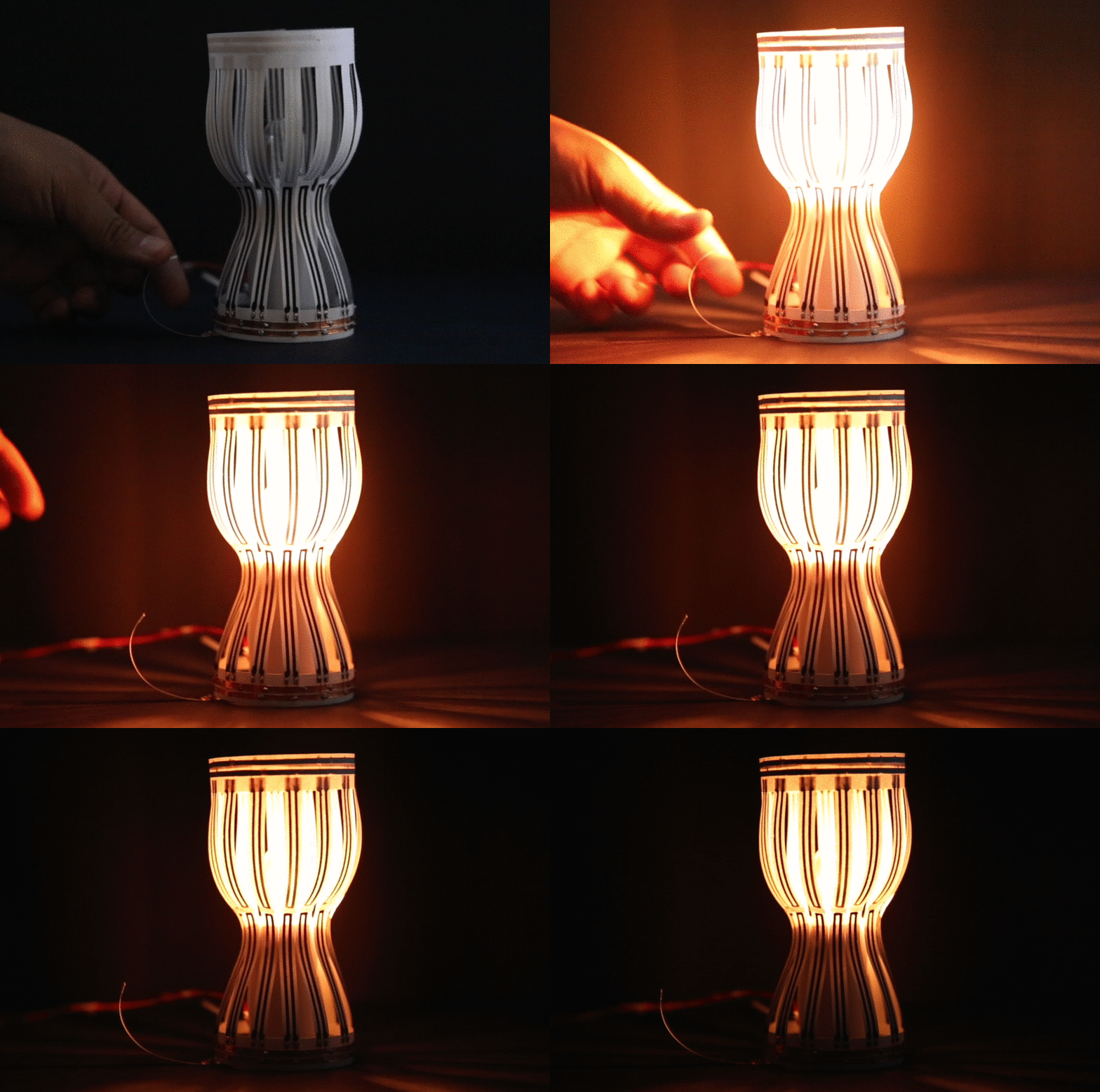 Source: CMUA thin layer of conducting thermoplastic—applied either by 3D printing or hand painting—serves as a low-cost reversible actuator. When the electrical current is applied, the thermoplastic heats and expands causing it to bend or fold. When the current is removed, the paper returns to a pre-determined shape.
“We are reinventing this really old material,” said Lining Yao, assistant professor in the CMU HCII and director of the Morphing Matter Lab. “Actuation truly turns paper into another medium, one that has both artistic and practical uses.”
The HCII team designed basic types of actuators, including some based on origami and kirigami forms, enabling structures that can turn into balls, cylinders or more elaborate objects, such as a lamp shade which changes shape and shade level, or an artificial mimosa plant with leaf petals that open when touched.
Students at a workshop at Zhejiang University in Hangzhou, China, used the paper actuation technology to create pop-up books that react when touched.
“Most robots—even those that are made of paper—require an external motor,” said Wang, a CMU Manufacturing Futures Initiative fellow. “Ours do not, which creates new opportunities, not just for robotics, but for interactive art, entertainment and home applications.”
How They Did It
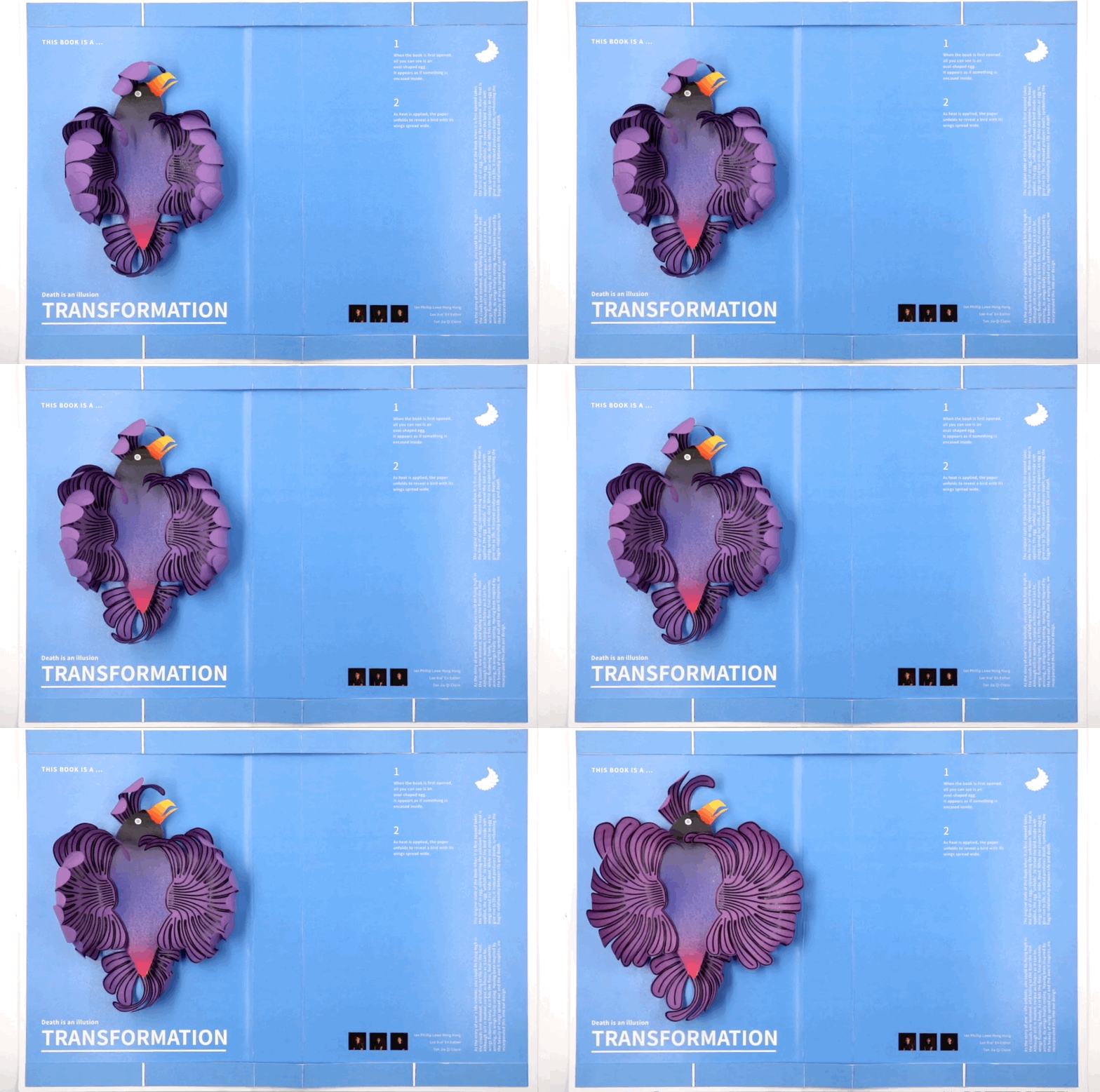 Source: CMUUsing an inexpensive 3D printer that lays down a continuous filament of melted thermoplastic, researchers used an off-the-shelf printing filament—graphene polylactide composite—that conducts electricity.
The thermoplastic actuator is printed on plain copy paper in a 0.5 mm layer and heated in an oven or with a heat gun. The paper is bent or folded into a desired shape and allowed to cool. Electrical leads then are attached to the actuator and when electrical current heats the actuator, the thermoplastic expands and straightens the paper; when the current is removed the paper returns to its default shape.
CMU is refining the method by changing the printing speed or the width of the thermoplastic to achieve different folding or bending effects. The team has also developed methods for printing touch sensors, finger sliding sensors and bending angle detectors that can control the paper actuators.
The next step is to see if the same actuation used for paper might also be used for plastics and fabrics, researchers said.
For more information about this project, click here.
