
Researchers from the University of Waterloo are using artificial intelligence to find new insights that help reduce wear-and-tear injuries and boost the productivity of construction workers on site.
Studies with motion sensors and AI software have revealed that expert bricklayers use previously unidentified techniques to limit the loads on their joints. Thanks to AI these techniques can now be passed on to apprentices in training programs.
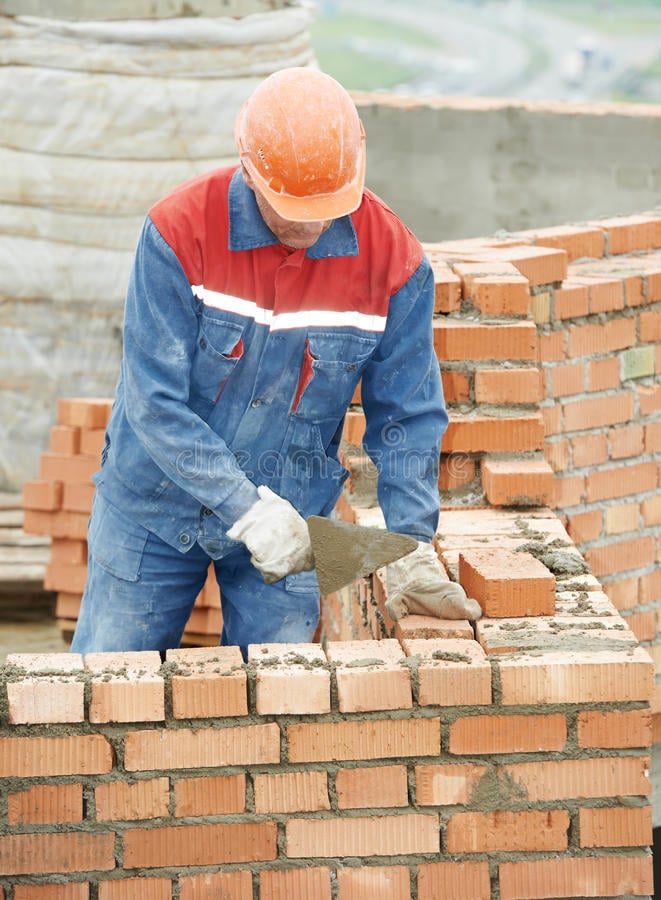 Construction mason worker bricklayer installing red brick with trowel putty knife. Source: Dmitry Kalinovsky/Dreamstime
"The people in skilled trades learn or acquire a kind of physical wisdom that they can't even articulate," said Carl Haas, a professor of civil and environmental engineering at Waterloo. "It's pretty amazing and pretty important."
The research shows that master masons don’t follow the standard ergonomic rules that are currently being taught to novices. The masters develop their own ways to work quickly, but also safely.
An example of this includes more swinging than lifting of blocks and therefore less bending of their backs.
"They're basically doing the work twice as fast with half the effort - and they're doing it with higher quality," said Haas, who leads the research with Eihab Abdel-Rahman, a systems design engineering professor at Waterloo. "It's really intriguing."
In the first study, the researchers looked at data from bricklayers of various experience levels who wore sensor suits while they built a wall with concrete blocks. The data collected showed that the experts put less stress on their bodies but were also doing much more work.
A secondary study was done to determine how master masons work so efficiently. It involved the use of sensors to record their movements and AI computer programs in order to identify patterns of body positions.
The next focus for the researchers is to do a more in-depth study of how the experts move on the job.
"Skilled masons work in ways we can show are safer, but we don't quite understand yet how they manage to do that," said Hass, who compares their skill to a professional golf swing. "Now we need to understand the dynamics."
Musculoskeletal injuries are a huge problem for construction workers whose job it is to lay bricks. It causes many apprentices to drop out of the program, and many experienced workers to have to retire earlier because they wear out.
The researchers are developing a system that uses sensor suits to give trainees immediate feedback so they can modify movements in order to reduce stress on their bodies.
"There is an unseen problem with craft workers who are just wearing out their bodies," he said. "It's not humane and it's not good for our economy for skilled tradespeople to be done when they're 50."
A paper on this research was published in the journal Automation in Construction.
