
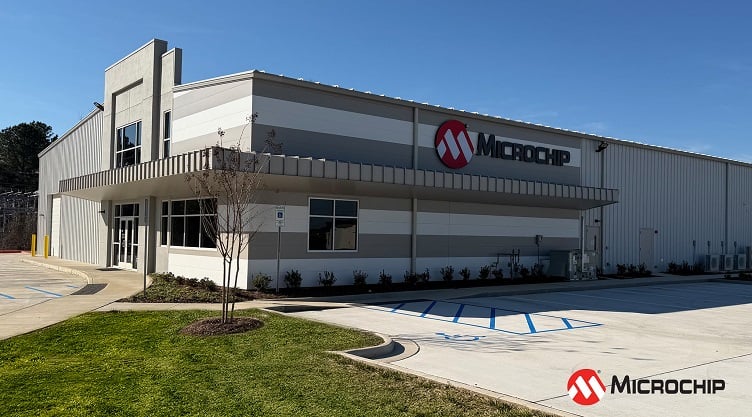
Microchip Technology Inc. has opened a new facility in Tuscaloosa, Alabama, that will focus on the manufacturing of active hydrogen maser atomic clocks.
The company said it is expanding its active hydrogen maser autonomic clocks in response to rising demand for the technology to protect infrastructure from disruptions and outages.
Hydrogen masers emit microwave frequencies for precise timekeeping and actively contribute to Coordinated Universal Time (UTC). This technology is used to keep global standard for the time of day on critical infrastructure applications like:
- Power grids
- Cell phone networks
- Satellites communications
Microchips MHM-2020 active hydrogen maser is used for scientific research, national timekeeping services, radio astronomy, deep space tracking networks and GNSS/GPS ground stations. The device offers 1 picosecond synchronization for precise calibration to GNSS with a lifetime of greater than 20 years, the company said.
The new facility
The facility expands Microchip’s time and synchronization portfolio like the MHM-202 but also the auxiliary output generator AOG-110 and the 1000C OCXO crystal oscillator devices.
The new facility is about 15,000 sq ft with temperature stability testing areas and an R&D lab. The facility is within miles of the University of Alabama campus and Microchip formed an agreement with the university that includes equipment, training and employing students.
“This facility in Tuscaloosa was a priority for Microchip, both to meet the growing customer demand for our hydrogen masers and to strengthen our collaboration with the University of Alabama’s Precision Navigation and Time Laboratory,” said Randy Brudzinski, corporate VP of Microchip’s frequency and time systems business unit. “This investment increases our capacity to deliver the advanced timing technologies our customers rely on.”
